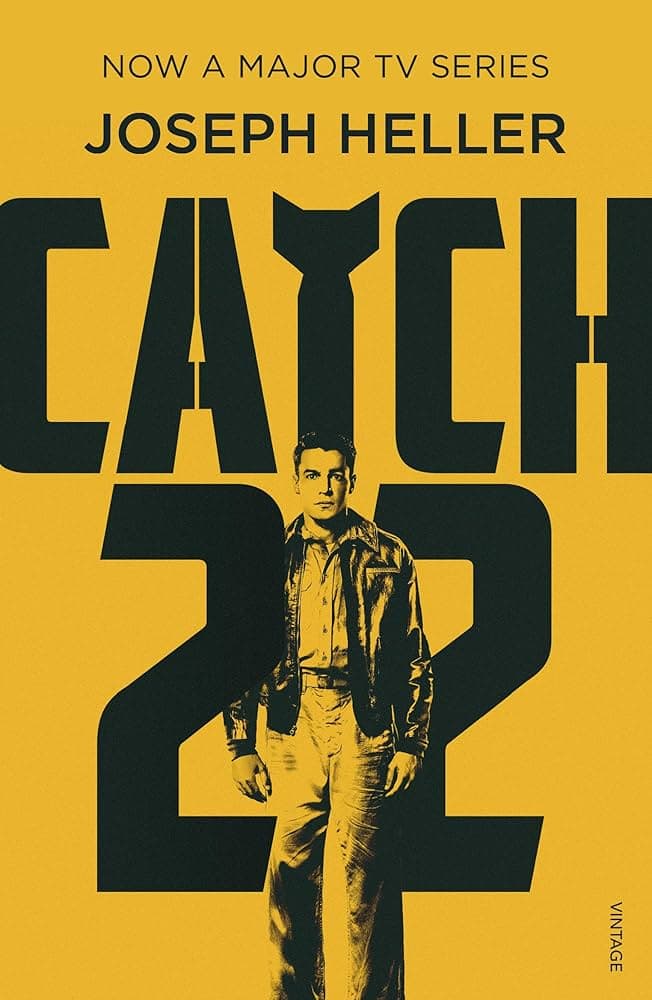
Catch-22 book cover

Catch-22 Summary and Complete Study Guide

by Joseph Heller
Published: 1961Classic LiteratureModern Library #11

Complete Study Resources:

✓ Full plot summary

Joseph Heller's 1961 darkly comic masterpiece about Captain John Yossarian, a WWII bombardier trying to stay alive by getting grounded for insanity—but the infamous Catch-22 prevents it: if you're sane enough to want to avoid combat, you're sane enough to fly missions.

Complete Plot Summary

Catch-22 is structured non-chronologically, jumping through time to create disorientation matching Yossarian's wartime experience. The novel circles around Snowden's death—a traumatic event Yossarian witnessed that shapes everything, though details are withheld until late in the novel. This structure makes readers feel the confusion and trauma Yossarian feels, where past and present blur together in remembered horror. Yossarian is stationed in Pianosa, flying bombing missions over Italy and France. He's terrified and trying desperately to get grounded. He tries faking illness, but Doc Daneeka won't ground him. He tries going crazy, but that triggers Catch-22: wanting to be grounded proves you're sane. He's trapped in a system designed to prevent escape—every loophole closes when you try to use it, every regulation contradicts itself, every authority figure is insane but has power. The missions get progressively more dangerous as Colonel Cathcart keeps raising the required number to make himself look good for promotion. Pilots who complete 30 missions find the requirement raised to 40, then 50, then 60. Men die on missions or go insane, but the bureaucracy continues grinding. Anyone who completes their missions and tries to go home finds new regulations preventing it. Milo Minderbinder's capitalism subplot shows war as business opportunity. Milo starts by trading eggs, builds a massive syndicate controlling black market across Europe, and eventually bombs his own base because Germans paid him to—killing American soldiers for profit. When questioned, Milo shows the profit margin and everyone agrees it was good business. This satire exposes how capitalism's logic justifies any atrocity if it's profitable. Yossarian witnesses increasing horror: friends dying in arbitrary ways, burned in planes, drowned in parachutes, killed by bureaucratic incompetence. The chaplain tries to help but is powerless. Authorities are either absent, insane, or actively malicious. Every appeal to reason, morality, or common sense fails because the system isn't designed for reason—it's designed for continued operation regardless of cost in human lives. The Snowden revelation comes late: Snowden was hit by flak during a mission. Yossarian tried to treat his visible leg wound while Snowden kept saying "I'm cold." When Yossarian opened Snowden's flak suit, Snowden's insides spilled out—the fatal wound was hidden. Snowden's death teaches Yossarian that "man is matter" and can be destroyed easily. This trauma drives Yossarian's desperate survival instinct. After Snowden, he cannot pretend war is noble or survivable through courage—it's just random death that will eventually catch everyone. Yossarian finally refuses to fly more missions, risking court-martial. The authorities offer him a deal: they'll send him home as a hero if he publicly supports them and says nice things about Colonel Cathcart. This would save Yossarian but betray everyone still trapped flying missions. He almost accepts, then refuses—he cannot save himself by endorsing the system killing others. The novel ends with Yossarian learning that Orr (who crashed on every mission and was presumed dead) actually made it to Sweden—he'd been practicing crashes to escape. This proves escape is possible. Yossarian decides to desert, fleeing to Sweden rather than accept the devil's bargain or continue flying. He chooses desertion as the only moral option when the system offers only immoral choices: fly until you die, or collaborate with the system killing others. Desertion isn't heroic but it's sane—removing yourself from insane system rather than trying to change it from within.

Main Characters in Catch-22

Catch-22 features complex characters representing different aspects of society and the human condition.

Captain John Yossarian is the novel's protagonist, a bombardier stationed on the Italian island of Pianosa during World War II. Yossarian is terrified of dying and desperately trying to get grounded. He flies missions but only cares about survival, not patriotism or victory. His fear is rational—people are trying to kill him—but the military calls it cowardice. Yossarian represents the sane man trapped in an insane system where self-preservation is punished and suicidal duty is rewarded. Doc Daneeka is the flight surgeon who explains Catch-22 to Yossarian: pilots can be grounded for insanity if they ask, but asking to be grounded proves you're sane (because only a sane person would want to avoid combat), so you can't be grounded. This circular logic defines the novel's philosophy: the system is designed to trap you, and trying to escape proves you should stay trapped. Milo Minderbinder is the mess officer who creates a massive black market syndicate, eventually bombing his own base for profit. He represents capitalism taken to absurd extreme—everything is justified if it makes money, even treason. Colonel Cathcart keeps raising the required number of missions so he can get promoted, trapping pilots who complete their required missions only to find the requirement increased. He represents bureaucratic ambition that treats soldiers as statistics. Major Major Major Major (really his name—his father's joke) is promoted to major through computer error and spends his career hiding from everyone, making himself unavailable whenever anyone wants to see him. He represents how absurdity compounds into policy. Nately is a young pilot in love with a prostitute in Rome, representing romantic idealism destroyed by war. Orr is Yossarian's tent mate who crashes on every mission, later revealed to have been practicing to escape to Sweden—the only character who successfully escapes. The Chaplain is a kind religious man who discovers that kindness and faith are useless in military bureaucracy. Nurse Duckett is Yossarian's lover who he betrays when self-preservation overcomes affection—showing how war corrupts basic human decency.

Complete Character Analysis →

The Ending Explained

Yossarian discovers his friend Orr didn't die—he crashed deliberately and rowed to neutral Sweden. It's possible to escape! But the colonels offer Yossarian a deal: tell everyone the military is great, and they'll send him home. He's tempted but realizes accepting the deal means becoming complicit in the system that's killing people. Instead, he decides to desert to Sweden like Orr. The last line is him jumping and running. Heller's saying that bureaucracy is insane, war is absurd, profit motives create inhuman decisions, and the only sane response to an insane system is to refuse to participate. Catch-22 entered the language as a term for no-win situations. It's darkly funny but shows how institutions value themselves over human lives.

Famous Quotes from Catch-22

Just because you're paranoid doesn't mean they aren't after you.

There was only one catch and that was Catch-22.

He was going to live forever, or die in the attempt.

Anything worth dying for is certainly worth living for.

Why This Book Matters

Published 1961. Sold over 10 million copies. Term "Catch-22" entered common language.