East of Eden
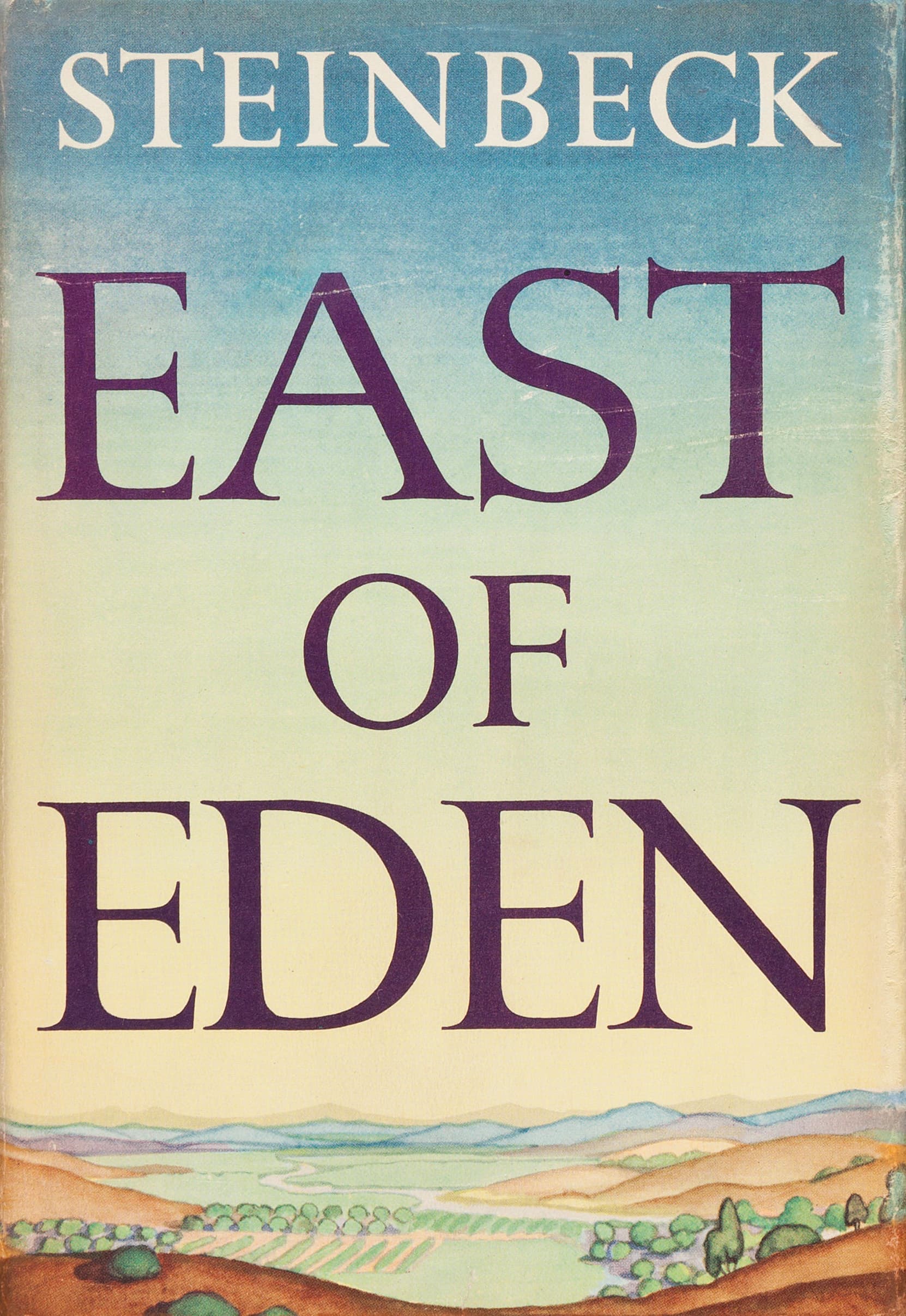
East of Eden Summary and Complete Study Guide
Complete Study Resources:
John Steinbeck's 600-page magnum opus retelling the biblical Cain and Abel story across two generations of the Trask family in California's Salinas Valley, centered on the Hebrew word 'timshel' (thou mayest)—the freedom to choose between good and evil.
What is East of Eden About? (Quick Summary)
Quick Answer: East of Eden is John Steinbeck's 600-page magnum opus retelling the biblical story of Cain and Abel across two generations of the Trask family in California's Salinas Valley. The novel centers on the Hebrew word "timshel" (thou mayest)—meaning humans have free will to choose between good and evil. Cal Trask inherits his mother's darkness but receives his dying father's blessing: "timshel"—permission to choose good despite his guilt.
Frequently Asked Questions
❓ What does "timshel" mean?
"Timshel" is Hebrew for "thou mayest"—the novel's central concept. It means humans have free will to choose between good and evil. You're not doomed by your heritage or nature; you may choose goodness despite temptation.
❓ Is Cathy Ames pure evil?
Steinbeck presents Cathy as born without conscience—a "monster" incapable of love or empathy. But the timshel concept suggests even Cathy could have chosen differently. The novel debates whether evil is nature or choice.
❓ How does the Cain and Abel story connect?
The novel retells Cain and Abel twice: Charles vs Adam Trask (first generation), then Cal vs Aron Trask (second generation). In both, one brother is favored while the other is rejected, leading to violence and tragedy.
❓ Is it based on Steinbeck's family?
Yes—Steinbeck said it was "the story of my country and the story of me." The Hamilton family are his actual maternal grandparents. The Salinas Valley setting is where he grew up. It's his most autobiographical novel.
❓ How does East of Eden end?
Adam Trask, after a stroke, uses his final breath to say "timshel" to his son Cal—giving him permission to choose goodness despite guilt over Aron's death. It's a blessing of free will and redemption.
❓ Why is it called "East of Eden"?
From Genesis: after killing Abel, Cain "went out from the presence of the Lord and dwelt in the land of Nod, on the east of Eden"—exiled from paradise. The title suggests America (California) as fallen paradise where humans grapple with inherited sin.
Complete Plot Summary
Main Characters in East of Eden
East of Eden features complex characters representing different aspects of 1920s American society, the American Dream, and social class divisions.
Cal Trask
The dark Cain figure who struggles with inherited evil from mother Cathy. Desperate for his father's love and approval, embodying the choice between good and evil.
Read full analysis →Cathy Ames
The novel's villain—born without conscience, incapable of love. Becomes prostitute and madam, representing pure evil and the darkest human capacity.
Read full analysis →Adam Trask
The innocent Abel figure destroyed by Cathy but eventually finding redemption through understanding timshel—offering his son the free will he never had.
Read full analysis →+ 4 More Characters
Aron Trask, Lee (Chinese servant), Samuel Hamilton, and Charles Trask - each embodying different moral choices.
View all characters →Major Themes in East of Eden
Timshel: Free Will & Choice
The novel's central theme: "timshel" (thou mayest) means humans have free will to choose between good and evil. You're not doomed by inherited sin or family patterns—you may overcome your nature through choice.
The Nature of Evil
Through Cathy Ames, Steinbeck explores whether evil is innate (born without conscience) or chosen. The Cain and Abel retelling asks if we inherit our parents' sins or choose our own paths.
The Ending Explained
How does East of Eden end?
Famous Quotes from East of Eden
“And now that you don't have to be perfect, you can be good.”
“Timshel—'Thou mayest'—that gives a choice. It might be the most important word in the world.”
“Sometimes a man wants to be stupid if it lets him do a thing his cleverness forbids.”
Why This Book Matters
East of Eden is considered the quintessential American novel for good reason. Fitzgerald's masterful prose, complex characters, and devastating critique of wealth and class remain startlingly relevant nearly a century after publication.
Impact and Significance:
- •Timeless Themes: The American Dream, class division, and the impossibility of recapturing the past resonate in every era
- •Literary Excellence: Fitzgerald's prose is considered some of the finest in American literature
- •Cultural Impact: The novel has sold over 25 million copies and shaped American identity
- •Required Reading: Taught in schools worldwide as essential American literature
Ready to Dive Deeper?
Explore detailed analysis, essay examples, and study tools:
Character Analysis
Deep dive into Cal Trask, Cathy Ames, Adam Trask, and all major characters representing good vs evil and the power of choice.
Read more →Themes & Symbols
Explore timshel (free will), Cain and Abel parallels, good vs evil, inherited sin, and Steinbeck's philosophical depth.
Read more →Chapter Summaries
Complete breakdown of all 9 chapters with key events, quotes, and analysis for each chapter.
Read more →Essay Examples
5 complete essay examples with prompts, thesis statements, outlines, and full sample essays.
Read more →Study Tools: Quiz & Flashcards
Test your knowledge with 50 interactive flashcards and a 21-question quiz with instant feedback.
Start studying →About F. Scott Fitzgerald
Learn about the author's life, writing style, and the personal experiences that shaped this American masterpiece.
Read biography →