← Back to all books
Fahrenheit 451
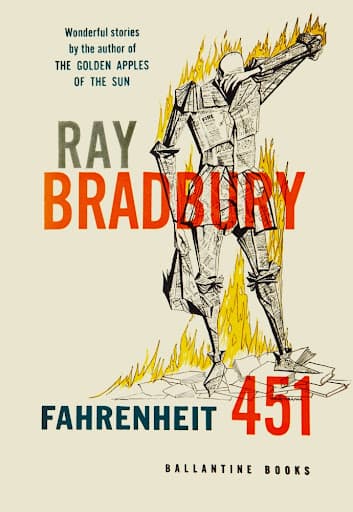
Fahrenheit 451 Summary and Complete Study Guide
by Ray Bradbury
Published: 1953Science FictionPrometheus Hall of Fame
Complete Study Resources:
✓ Full plot summary
In a future where books are banned and burned, a fireman starts questioning his job and society itself.
Complete Plot Summary
Montag has been burning books for years without questioning it. Then Clarisse asks if he's happy, and it breaks something open in him. She disappears (probably killed by a car, like many pedestrians in this society). Mildred overdoses on sleeping pills. Montag starts stealing books from houses before burning them. He tries to read them but doesn't understand what makes them valuable. He visits Faber, who explains books aren't magic—they just give you time to think, unlike the constant noise of TV walls and advertising.
Main Characters in Fahrenheit 451
Fahrenheit 451 features complex characters representing different aspects of society and the human condition.
Montag transforms from enforcer to rebel through awakening consciousness. Clarisse catalyzes change through simple questions. Beatty represents intelligent defense of oppression. Mildred embodies voluntary numbness. Faber teaches that books matter because they provide time to think.
Major Themes in Fahrenheit 451
Bradbury warns against self-censorship and voluntary ignorance. Technology becomes distraction preventing thought. The book critiques conformity and celebrates intellectual freedom. Fire symbolizes both destruction and rebirth. Modern relevance: social media bubbles, entertainment as numbing agent, and choosing comfort over challenging ideas. The memorizers preserving books shows knowledge survives attempts to destroy it.
The Ending Explained
Montag's book stash gets discovered. Beatty makes Montag burn his own house, then taunts him. Montag snaps and burns Beatty alive with the flamethrower. He runs, hunted by the Mechanical Hound and broadcast on live TV. He escapes to the countryside where he finds a group of hobo intellectuals who've memorized entire books to preserve them. They watch on a portable TV as the city gets destroyed by atomic bombs—society's shallow entertainment culture didn't prepare them for actual threats. The memorizers head back to rebuild civilization. What Bradbury fears isn't government censorship—it's people choosing entertainment over thought, choosing comfort over challenge. When everyone wants to avoid being offended, books disappear. When people stop reading and thinking, they become easy to control. It's about defending intellectual freedom and the value of being uncomfortable.
Famous Quotes from Fahrenheit 451
“There must be something in books to make a woman stay in a burning house.”
Why This Book Matters
Published in 1953 during McCarthy era. Sold over 10 million copies. Title references temperature at which paper burns. Remains relevant for censorship and intellectual freedom debates.
Ready to Dive Deeper?
Explore detailed analysis, essay examples, and study tools: