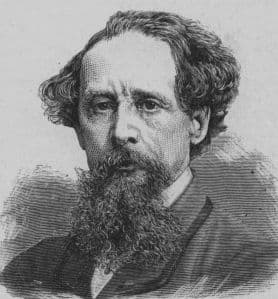
Charles John Huffam Dickens was born February 7, 1812, in Portsmouth, England, to middle-class parents who struggled financially throughout his childhood. His father John Dickens worked as a naval clerk but lived beyond his means and eventually was imprisoned for debt in Marshalsea Prison when Charles was twelve years old. This event shattered the family's middle-class pretensions and became the defining trauma of Dickens' childhood, shaping his lifelong advocacy for the poor and his critique of Victorian class assumptions.
While his father was in prison, young Charles was sent to work at Warren's Blacking Factory, pasting labels on shoe polish bottles for ten hours daily. The work was humiliating, the conditions were terrible, and the experience of child labor and social degradation scarred him permanently. He felt abandoned by his family and crushed by the system that allowed children to be exploited. Even after his father was released and Charles was allowed to return to school, he never forgot the shame of being a working child among working-class boys, or the casual cruelty of a society that saw nothing wrong with child labor.
This childhood experience directly shaped Great Expectations. Pip's shame about his working-class origins, his desperate desire to escape into gentleman status, his later recognition that the people who loved him when he had nothing were worth more than the wealthy who accepted him when he rose—all of this reflects Dickens' own psychological journey. Dickens escaped poverty through education and writing talent, became wealthy and famous, and spent his career critiquing the class system that had nearly destroyed him. He knew from experience that being poor didn't make you morally inferior, and being wealthy didn't make you morally superior. Victorian society taught otherwise, and Dickens spent decades proving it wrong.
After the blacking factory, Dickens educated himself. He worked as a law clerk, taught himself shorthand, and became a journalist reporting on Parliament and court cases. He observed how the legal system, the political system, and the social welfare system all served the wealthy while crushing the poor. This journalistic experience gave him detailed knowledge of social institutions that he later critiqued in his novels. He didn't write about poverty from imagination—he wrote from observation and experience.
His literary career began with The Pickwick Papers (1836), serialized in monthly installments. It became wildly popular, and Dickens discovered his talent for creating memorable characters and engaging plots. More importantly, he discovered that serial publication allowed him to reach working-class readers who couldn't afford expensive books but could buy monthly installments. His novels were read aloud in pubs and working-class homes, making him one of the first authors whose work crossed class boundaries. He wrote for everyone, not just the educated elite.
Oliver Twist (1838) exposed the cruelty of workhouses and the hypocrisy of the Poor Law system. A Christmas Carol (1843) attacked the greedy capitalism that valued profit over human welfare. David Copperfield (1850) drew heavily from his own childhood trauma. Bleak House (1853) critiqued the legal system's complexity and corruption. Hard Times (1854) attacked industrial capitalism's dehumanization of workers. Every major novel combined entertainment with social reform advocacy. Dickens believed literature should expose injustice and create empathy. He used vivid characterization and dramatic plotting to make readers care about people society ignored.
Great Expectations was published serially from December 1860 to August 1861 in Dickens' own magazine, All the Year Round. By this point in his career, Dickens had perfected his craft. The novel shows his mature artistry: psychologically complex characters, sophisticated first-person narration, symbolic density, systematic thematic development. Unlike his earlier works that sometimes sentimentalized the poor, Great Expectations offers clear-eyed analysis of how class corrupts everyone—including those who rise from poverty. Pip becomes morally worse when he becomes a gentleman, and his recovery requires unlearning the false values society taught him. This is Dickens' most sophisticated class critique: the system doesn't just oppress the poor, it corrupts the wealthy and everyone who aspires to wealth.
The novel originally had a different ending. Pip and Estella met years later, she remarried, they parted as friends. Dickens' friend Edward Bulwer-Lytton convinced him this was too bleak, so Dickens revised it: they meet at Satis House ruins and Pip sees "no shadow of another parting from her," suggesting possible reunion. Modern editions include both endings because neither provides clear resolution—Pip's future remains uncertain either way. This ambiguity is thematically appropriate: Pip has grown but remains damaged, improved but not healed. Complete happy ending would contradict the novel's realism about how class corruption scars permanently.
Dickens' personal life was complicated. He married Catherine Hogarth in 1836 and had ten children, but the marriage was unhappy. He separated from her in 1858—scandalous in Victorian England—and may have had a relationship with actress Ellen Ternan, though he kept it secret. He worked obsessively, editing magazines, writing novels, and performing dramatic public readings from his works that exhausted him physically. The readings were wildly popular—he was a brilliant performer—but the physical strain damaged his health.
He died of a stroke on June 9, 1870, at age 58, leaving his final novel The Mystery of Edwin Drood unfinished. He was buried in Westminster Abbey's Poets' Corner despite having requested simple burial. The nation recognized him as their greatest novelist and social conscience. His death was mourned widely. The poor felt they'd lost their advocate. The wealthy recognized him as the Victorian era's most important literary voice.
Dickens' legacy extends far beyond literature. He changed how Victorian England thought about poverty, child labor, education, legal reform, and social welfare. His novels exposed injustices that laws then addressed. He created the modern conception of Christmas through A Christmas Carol. He proved popular literature could achieve artistic excellence while advocating for social reform. He influenced every English novelist who followed, from George Eliot to George Orwell to contemporary writers. His characters—Scrooge, Oliver Twist, Miss Havisham, Pip—became archetypes that transcend their novels.
Great Expectations endures because its class critique remains relevant. We still assume wealth indicates merit. We still structure society to reward the already-advantaged. We still confuse refinement with character and status with worth. Dickens' systematic demonstration that these assumptions invert reality speaks to any era with class inequality. The novel teaches us to see Joe's true gentility and Magwitch's nobility despite society teaching us to see only shame. That education in seeing clearly matters as much now as in Victorian England.
Understanding Dickens' life helps you read Great Expectations with more complexity. He wasn't an outsider critiquing class from distance—he experienced poverty's shame, rose to wealth and fame, and understood both worlds from inside them. He knew what Pip felt being ashamed of his origins because he felt it too. He knew how society teaches you false values because he learned them and had to unlearn them. Great Expectations is autobiographical in theme if not in plot: the psychological journey from shame about origins through corrupting ambition to hard-won recognition of true worth mirrors Dickens' own moral education. When Pip learns that the blacksmith was a gentleman all along, Dickens was acknowledging what he'd learned: that the working-class people who loved him when he had nothing were worth more than the wealthy society that accepted him when he became famous. The novel is his moral accounting. And it's his gift to readers: teaching us to see worth where society teaches us to see only class.