← Back to all books
Les Misérables
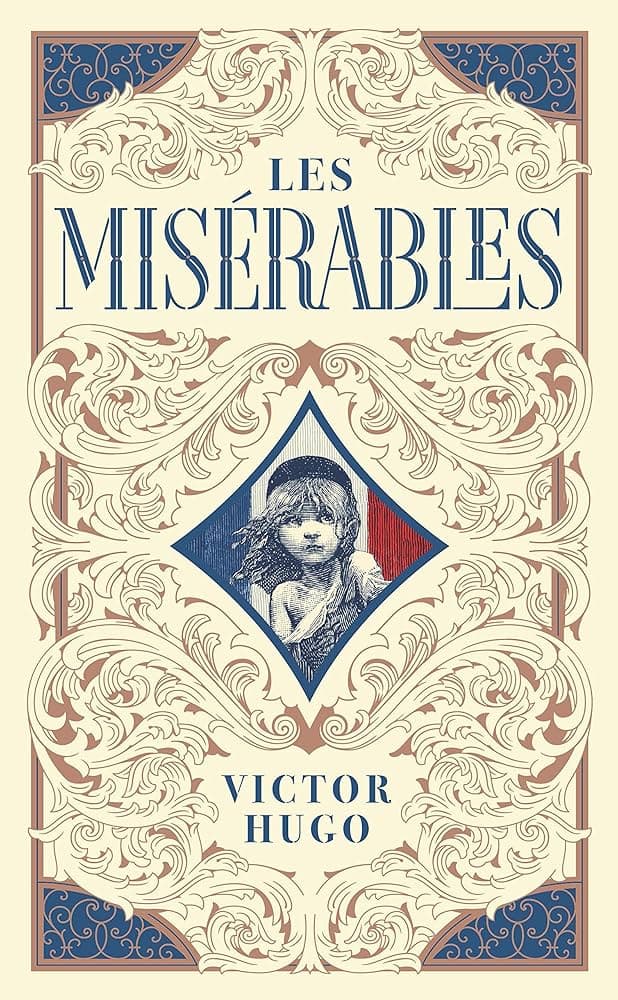
Les Misérables Summary and Complete Study Guide
by Victor Hugo
Published: 1862Historical FictionFrench Literary Canon
Complete Study Resources:
✓ Full plot summary
An ex-convict struggles to redeem himself while pursued by a relentless lawman through decades of French history.
Complete Plot Summary
Valjean gets parole but breaks it after a bishop's kindness inspires him to become a better person. He becomes a successful factory owner and mayor under a new identity. Fantine works in his factory until she's fired and forced into prostitution to pay the Thénardiers, who are abusing her daughter Cosette. Valjean promises the dying Fantine he'll rescue Cosette. But Javert recognizes Valjean and pursues him. Valjean rescues Cosette and they flee to Paris, living quietly until Cosette grows up and falls for Marius during the June Rebellion of 1832.
Main Characters in Les Misérables
Les Misérables features complex characters representing different aspects of society and the human condition.
**Jean Valjean**: Nineteen years in prison for stealing bread transforms him from desperate into something harder and angrier. The bishop's mercy—giving him silver candlesticks after Valjean robbed him—cracks open possibility for change. Valjean's whole arc is proving people can transform if given a chance. But transformation isn't linear. He constantly struggles with his past identity versus who he wants to be. When he reveals himself in court to save a man wrongly identified as him, that's heroism—he sacrifices his freedom for a stranger. His love for Cosette redeems him fully. He's a Christ figure but also genuinely human: afraid, struggling, sometimes failing. Hugo shows that saints aren't born; they're made through choosing good over and over despite circumstances.
**Javert**: The antagonist who's not exactly a villain. He genuinely believes law equals morality. Born in prison to criminal parents, he rejected that legacy by embodying law enforcement. To him, Valjean broke parole and must be punished—mercy and context don't matter, only rules. His suicide after Valjean saves his life isn't weakness; his entire worldview shattered. If a criminal can be good and show mercy, if law and justice aren't the same, then what's Javert been doing his whole life? Rather than rebuild his understanding, he chooses death. Tragic because he's trapped by rigid thinking. Hugo sympathizes with him while condemning the inflexibility.
**Fantine**: Abandoned by her lover with a child, forced to leave Cosette with the Thénardiers who bleed her dry. She loses her factory job when her "immorality" is discovered. She sells her hair, then her teeth, then her body—each step more desperate. Her descent shows how society punishes women for men's failures. She dies thinking she failed Cosette, but Valjean's promise to care for Cosette gives meaning to her suffering. She represents all the invisible women destroyed by a system that offers them no options.
**Marius**: The idealistic revolutionary who's also kind of useless. He loves Cosette with all the passion of youth but abandons Valjean when he learns his past. Only when it's too late does he realize Valjean saved his life, cared for Cosette perfectly, and deserved respect. His political idealism is beautiful but ineffective—the rebellion fails. Hugo wrote this after failed 1848 revolutions, knowing idealism without strategy doesn't win. Marius survives but many don't, showing revolution's cost.
Major Themes in Les Misérables
**Redemption is Possible**: The whole book hinges on this. Valjean proves people aren't permanently defined by their worst moments. Society wants to mark criminals forever (parole papers, prejudice). Hugo argues this is wrong—people can change fundamentally if shown mercy. The bishop's gift of candlesticks might be fiction's most important act of grace. It doesn't fix everything instantly, but it makes transformation possible. This contradicted 19th-century thinking about criminal nature being fixed.
The Ending Explained
During the doomed rebellion, Valjean saves Marius's life by carrying him through the sewers, even though Marius is taking Cosette away from him. Javert, who Valjean also saved, can't reconcile mercy with his rigid view of justice, so he throws himself in the Seine. Cosette and Marius marry. Valjean confesses his criminal past to Marius, who pulls away from him. Only when Valjean is dying do they realize how much he sacrificed out of love. Valjean dies peacefully, knowing Cosette is safe. Hugo's themes? The legal system and moral justice aren't always aligned. Love and mercy redeem people more effectively than punishment. Social injustice creates criminals. One act of kindness (the bishop's) can change everything. It's sprawling and sometimes preachy, but the core message about redemption and grace still hits hard.
Famous Quotes from Les Misérables
“To love another person is to see the face of God.”
“Even the darkest night will end and the sun will rise.”
“He never went out without a book under his arm, and he often came back with two.”
“To die is nothing; but it is terrible not to live.”
Why This Book Matters
Published 1862 during Hugo's exile (he opposed Napoleon III). Became instant bestseller despite critics calling it too sentimental and political. The 1985 musical adaptation by Schönberg and Boublil became one of the longest-running shows in history, introducing the story to millions who never read the 1,400-page novel. Les Mis has been translated into every major language and adapted dozens of times. It shaped how people think about criminal justice, poverty, and redemption. Hugo wrote it to show that society creates criminals through poverty and injustice, then punishes them for surviving. The book influenced prison reform movements and remains relevant whenever people debate whether ex-convicts deserve second chances. Fun fact: when it came out, it was criticized for being unrealistic that an ex-con could become good. Hugo was vindicated—social services and rehabilitation work. Punishment alone doesn't.
Ready to Dive Deeper?
Explore detailed analysis, essay examples, and study tools: