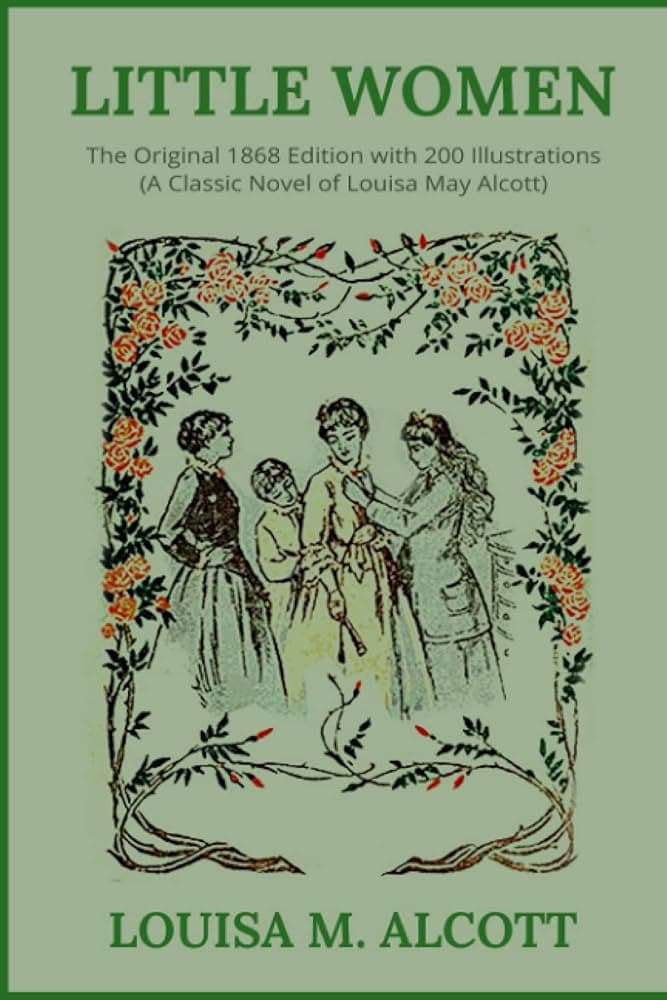
Little Women book cover

Little Women Summary and Complete Study Guide

by Louisa May Alcott
Published: 1868Classic LiteratureAmerican Classic

Complete Study Resources:

✓ Full plot summary

Louisa May Alcott's 1868 classic following the four March sisters—Meg, Jo, Beth, and Amy—as they grow from childhood to womanhood during the Civil War, learning about love, loss, ambition, and what it means to be a 'little woman' in 19th century America.

Complete Plot Summary

The novel opens in the March household during Christmas 1861, early in the Civil War. Mr. March is away serving as a chaplain in the Union Army, leaving Marmee to raise four daughters in genteel poverty. The girls—Meg (16), Jo (15), Beth (13), and Amy (12)—lament having no presents, but Marmee teaches them to be grateful for what they have and to help those less fortunate. This sets the novel's moral tone: virtue, sacrifice, and caring for others matter more than material wealth. The March sisters befriend Laurie, their wealthy neighbor, and his grandfather Mr. Laurence. These relationships provide both fun (parties, plays, adventures) and economic support (gifts, opportunities, eventually a marriage). Laurie becomes like a brother to the girls, particularly close to Jo, though his romantic feelings for her go unrecognized initially. The first half follows the sisters' adolescent adventures: Jo burns Meg's hair with curling tongs, Amy burns Jo's manuscript in revenge for being excluded, Beth befriends Mr. Laurence through music, and Meg is tempted by wealth at a party but chooses simpler values. These domestic dramas teach lessons about vanity, anger, forgiveness, and what truly matters. Alcott makes ordinary life meaningful—a burned manuscript becomes tragedy, a sister's illness becomes crisis. Mr. March becomes seriously ill in Washington, and Marmee rushes to nurse him. Jo sells her beautiful long hair to fund the trip—a sacrifice that shows her love for her father and her willingness to give up feminine beauty for family. While Marmee is away, Beth contracts scarlet fever from visiting a poor family with a sick baby. She nearly dies, and the experience damages her health permanently. Mr. March returns home recovered, but Beth's health never fully returns. Part Two (often published as "Good Wives") jumps three years ahead. Meg marries John Brooke, Laurie's tutor, and begins domestic life. Jo rejects Laurie's marriage proposal, devastating him and surprising readers who expected them to marry. Jo cannot see Laurie romantically and refuses to marry just to make him happy. This rejection is radical for 1868—the heroine rejects the handsome, wealthy boy who loves her because she doesn't love him back, choosing independence over security. Laurie goes to Europe heartbroken, where he eventually pursues and marries Amy, who has matured from spoiled girl into accomplished artist. Their marriage surprises Jo but works well—Laurie and Amy actually suit each other's temperaments. Meanwhile, Beth's health continues declining. She grows weaker through winter, and despite the family's desperate care, Beth dies peacefully with her family around her. Her death is the novel's emotional climax—the best, gentlest sister dying young because the world is unfair and goodness doesn't protect you from tragedy. After Beth's death, Jo goes to New York and meets Professor Bhaer, a poor German immigrant who teaches at her boarding house. Bhaer is older, not handsome, and has no money—the opposite of Laurie in every way. But he's intelligent, kind, and supportive of Jo's writing (though he criticizes her sensational stories and encourages more serious work). Jo falls in love with Bhaer's mind and character, and they eventually marry. The novel ends with Jo and Bhaer running a school for boys at Aunt March's estate, Jo writing while mothering students, finding happiness in work, family, and intellectual partnership rather than conventional romantic marriage.

Main Characters in Little Women

Little Women features complex characters representing different aspects of society and the human condition.

Jo March is the novel's protagonist and Alcott's semi-autobiographical character—a tomboyish, ambitious writer who refuses conventional femininity and dreams of literary success. At 15, Jo is impulsive, hot-tempered, and determined to help her family financially through writing. She sells her hair to fund her mother's trip to see their wounded father, writes sensational stories for money, and rejects marriage proposals because she values independence over romantic love. Jo represents the 19th century woman who wants more than domestic life—she wants career, freedom, and meaningful work, making her ahead of her time. Meg March is the eldest sister at 16, beautiful and more conventional than Jo. She wants marriage and domestic happiness, initially tempted by wealth but ultimately choosing love with poor tutor John Brooke. Beth March is the third sister, shy, gentle, and musical. She contracts scarlet fever from helping a poor family and never fully recovers, eventually dying young—representing the fragility of goodness in a harsh world. Amy March is the youngest, artistic and initially vain, who matures from spoiled girl to accomplished artist. She eventually marries Laurie (Jo's rejected suitor), finding both love and artistic fulfillment in Europe. Laurie (Theodore Lawrence) is the wealthy boy next door who becomes the sisters' friend and surrogate brother. He loves Jo desperately but she rejects him, unable to see him romantically. After this rejection, Laurie pursues Amy, eventually marrying her. Marmee (Mrs. March) is the sisters' mother, the moral center who teaches them to be good women through example rather than lectures. Professor Bhaer is the older German professor Jo eventually marries—poor, intellectual, and supportive of her writing, though the marriage requires Jo to compromise some independence.

Complete Character Analysis →

The Ending Explained

Beth's health never fully recovers and she dies young, devastating Jo. Meg marries and has twins but struggles with poverty. Amy goes to Europe as a companion, becomes a better artist, and eventually marries Laurie (yes, after Jo rejected him). Jo moves to New York to write and meets Professor Bhaer, a poor German teacher. She initially resists romance but eventually accepts that loving him doesn't mean giving up herself. She inherits Aunt March's house and creates a school for boys. The revolutionary part? Each sister gets to define success differently. Marriage isn't mandatory for happiness. Women can have ambitions beyond finding husbands. Jo especially breaks molds—she cuts her hair, sells it for money, rejects the rich handsome guy for the poor older professor she actually respects. Alcott based it on her own family and wrote what publishers thought wouldn't sell: a book about ordinary girls without fairies or European settings. Turns out girls wanted to read about girls like themselves.

Famous Quotes from Little Women

I am not afraid of storms, for I am learning how to sail my ship.

I'd rather take coffee than compliments just now.

Love covers a multitude of sins.

Watch and pray, dear, never get tired of trying, and never think it is impossible to conquer your fault.

Why This Book Matters

Published 1868, became an immediate bestseller and never went out of print. Alcott based it on her own family—she was Jo, and her sister Elizabeth's death from scarlet fever became Beth's story. Publishers initially rejected it, saying girls wouldn't read about domestic life without romance as the main plot. Wrong. Girls read it obsessively because it showed their actual lives and gave them a heroine who didn't want to get married. The book influenced how girls saw their options. Multiple film adaptations, including Greta Gerwig's 2019 version, keep introducing it to new generations. It's foundational American literature that proved female-focused stories could be commercially and artistically successful. Alcott resented having to write "moral pap for the young" but created something that transcended the limitations she felt trapped by.