← Back to all books
Slaughterhouse-Five
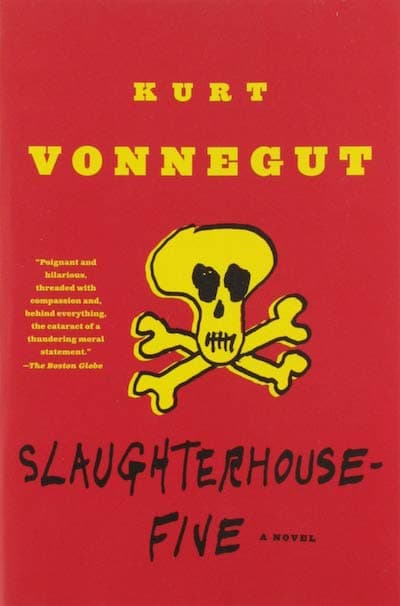
Slaughterhouse-Five Summary and Complete Study Guide
by Kurt Vonnegut
Published: 1969Science FictionModern Library #18
Complete Study Resources:
✓ Full plot summary
Billy Pilgrim becomes unstuck in time, experiencing World War II, alien abduction, and his own death in non-linear chaos.
Complete Plot Summary
The story jumps around because Billy experiences time non-linearly. He's a bumbling soldier in World War II, survives the Dresden bombing that killed 135,000 civilians, gets abducted by aliens who teach him that all moments exist simultaneously, becomes a successful optometrist, gets in a plane crash that kills everyone but him, and eventually gets assassinated by someone he knew in the war. "So it goes" appears every time someone dies (106 times total). The Tralfamadorians show him that free will is an illusion—all moments already exist, you just can't see them all at once.
Main Characters in Slaughterhouse-Five
Slaughterhouse-Five features complex characters representing different aspects of society and the human condition.
Billy Pilgrim represents trauma victims experiencing time non-linearly. Tralfamadorians teach acceptance or represent psychological coping mechanisms. Roland Weary embodies toxic masculinity in war. Vonnegut himself appears, blurring memoir and fiction.
Major Themes in Slaughterhouse-Five
Non-linear structure mirrors PTSD. "So it goes" after each death flattens mortality into mundane repetition. War is presented as absurd and incomprehensible rather than heroic. Free will versus determinism questions whether we control our lives. Dresden firebombing represents war's senseless civilian destruction. The bird call "poo-tee-weet" represents inadequacy of language after witnessing mass death.
The Ending Explained
Billy knows exactly when and how he'll die but can't prevent it. The book ends not with Billy's death but with the birds singing after the Dresden bombing—a moment of grace in the middle of the worst destruction he witnessed. Vonnegut's point? War is insane and beyond comprehension. Trying to make meaning from mass slaughter is impossible, so you end up saying "so it goes" because what else can you say? Time isn't linear—trauma makes you relive awful moments again and again. The Tralfamadorian philosophy (accepting you can't change anything) might be a coping mechanism for PTSD. It's an anti-war book that doesn't preach, it just shows the absurdity and horror and asks how anyone processes that level of death.
Famous Quotes from Slaughterhouse-Five
“So it goes.”
“Everything was beautiful and nothing hurt.”
Why This Book Matters
Published in 1969, based on Vonnegut's experience surviving Dresden firebombing. Has sold millions and defined how Americans discuss war trauma. "So it goes" entered cultural vocabulary.
Ready to Dive Deeper?
Explore detailed analysis, essay examples, and study tools: