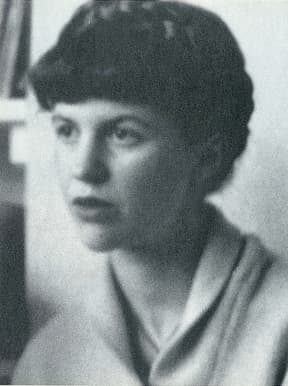
Sylvia Plath was born October 27, 1932, in Boston to academic parents. Her father Otto, a professor and bee expert, died when Sylvia was eight—a loss that haunted her entire life and appears throughout her poetry and fiction. She was brilliant, driven, and perfectionist from childhood: she published her first poem at age eight and won countless academic prizes. But beneath achievement was profound vulnerability to depression.
In 1953, after her junior year at Smith College, Plath attempted suicide by taking sleeping pills and hiding in a crawlspace—the event that becomes the climax of The Bell Jar. She was found after days, hospitalized, and received electroconvulsive therapy. She recovered sufficiently to return to Smith, graduate summa cum laude, and win a Fulbright scholarship to Cambridge University in England.
At Cambridge, she met poet Ted Hughes at a party. Their meeting was violent and passionate—Plath bit Hughes, drawing blood. They married in 1956 in a whirlwind romance. Their relationship was intensely creative but tumultuous. Both were ambitious poets competing for limited literary recognition. Plath felt trapped between her ambitions and expectations that she support Hughes' career while subordinating her own.
The Bell Jar was written in 1961 during a burst of creative productivity. Published under the pseudonym "Victoria Lucas" in January 1963 (one month before Plath's death), it received mixed reviews initially. Plath didn't live to see it recognized as the classic it became. The novel is semi-autobiographical: Esther's experiences parallel Plath's 1953 summer internship at Mademoiselle magazine and subsequent breakdown and hospitalization.
In 1962, Plath discovered Hughes' affair with Assia Wevill. The marriage collapsed. Plath moved with her two young children to London. Despite the personal devastation, or perhaps because of it, she entered a period of extraordinary poetic productivity. In October-February 1962-63, she wrote the poems that became Ariel—her masterpiece and one of the greatest poetry collections of the 20th century. These poems (Daddy, Lady Lazarus, Ariel, Edge) are brilliant, furious, confronting death and rebirth and rage with unprecedented intensity.
But she was also deeply depressed. The winter of 1962-63 was exceptionally cold. She was alone with two small children in a flat with inadequate heating. She was physically and emotionally exhausted. Her doctor prescribed antidepressants but they took weeks to become effective. On February 11, 1963, she died by suicide by gas oven while her children slept. She was 30 years old.
Plath's death transformed how The Bell Jar is read. The novel's ambiguous ending—Esther wondering if the bell jar will descend again—became tragic prophecy. For Plath, it did descend again. The book she wrote about surviving suicidal depression was published weeks before she died from depression. This biographical fact makes the novel simultaneously hopeful (Esther survives) and devastating (Plath didn't).
Her literary legacy is immense. Ariel established her as major poet. The Bell Jar became required reading, introducing millions to unflinching representation of mental illness and 1950s gender constraints. Her journals and letters, published posthumously, revealed the brilliant, ambitious, troubled person behind the work. She won the Pulitzer Prize posthumously in 1982 for Collected Poems—the first posthumous Pulitzer in poetry.
Plath's influence extends beyond literature. She gave language to depression (the bell jar metaphor) that people still use. She represented mental illness from inside rather than as distant clinical condition. She connected personal psychological suffering to social structures (1950s gender expectations) that oppress certain people systematically. Her work helped feminism articulate how "the personal is political"—that individual mental illness can have social causes requiring social change, not just individual treatment.
The tragedy of Plath's life—brilliant, driven, creative, struggling with depression, dying at 30—should not overshadow her literary achievement. She created formally innovative poetry. She wrote honestly about mental illness when stigma demanded silence. She connected psychological suffering to social oppression. She gave voice to experiences that remained unspoken. The Bell Jar endures not as tragedy but as powerful representation of depression, gender constraints, and survival (however uncertain). Her poetry endures as formally brilliant and emotionally devastating. She lived 30 years and created work that will outlive everyone reading this. That's her legacy—not the tragedy of her death but the triumph of her art.