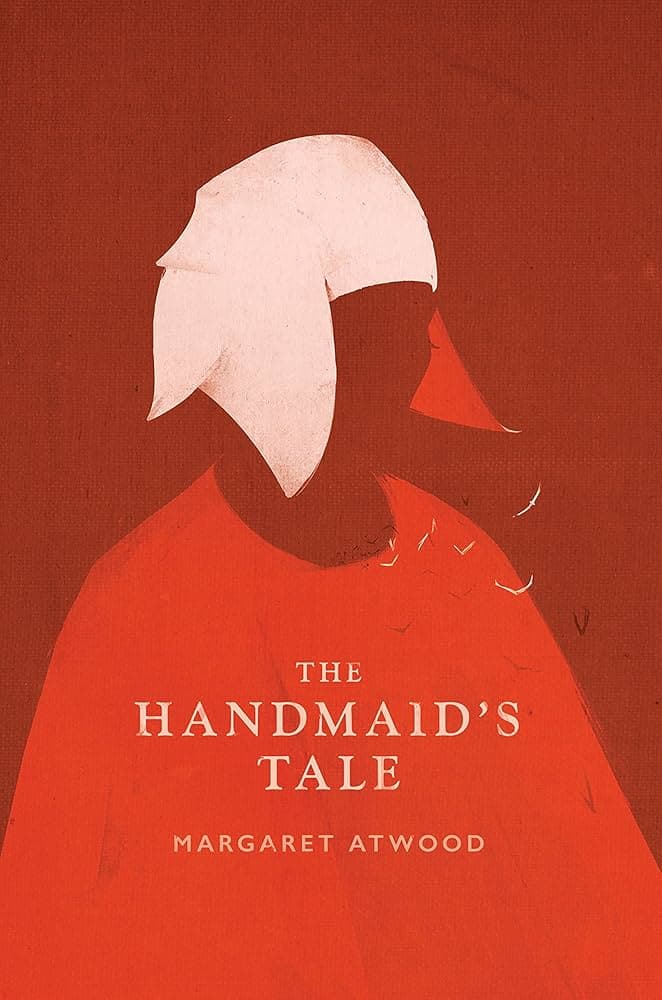
The Handmaid's Tale book cover

The Handmaid's Tale Summary and Complete Study Guide

by Margaret Atwood
Published: 1985Science FictionArthur C. Clarke Award

Complete Study Resources:

✓ Full plot summary

In a totalitarian future, women are stripped of rights and forced into reproductive servitude in a twisted religious state.

Complete Plot Summary

The Republic of Gilead overthrew the US government after a fertility crisis. Women are categorized by function: Wives, Handmaids (breeders), Marthas (servants), Aunts (trainers), or Econowives (poor women doing everything). Offred remembers her old life—her real name, her husband Luke, her daughter—but they were separated when she tried to escape to Canada. Now she lives with the Commander and his wife, her only purpose being to get pregnant during monthly ceremonies that are clinical rape disguised as religious ritual. The Commander secretly summons Offred to his study to play Scrabble, which is forbidden. He takes her to an underground club where elite men use women despite public piety.

Main Characters in The Handmaid's Tale

The Handmaid's Tale features complex characters representing different aspects of society and the human condition.

Offred is our narrator, a Handmaid whose only value is her working ovaries. The Commander is the high-ranking official she's assigned to for procreation. Serena Joy is the Commander's bitter wife who was once a TV personality advocating for traditional values—now she's trapped in them. Moira is Offred's rebellious friend from before. Nick is the Commander's driver who becomes Offred's lover. Aunt Lydia trains Handmaids through brutal indoctrination.

Complete Character Analysis →

The Ending Explained

Serena discovers the Commander's violations of his own rules and is furious. The resistance arrives in a van to extract Offred, but she doesn't know if it's really the resistance or the secret police. The book ends ambiguously—we don't know if she escapes. An epilogue set centuries later shows scholars discussing Gilead as ancient history, revealing it did eventually fall. Atwood's warning? Women's rights can be stripped away frighteningly fast when religious extremism meets political power. Every element of Gilead is based on something that's actually happened somewhere in history. She's showing how quickly society can regress, how people rationalize participation in oppression, and how normalizing the abnormal happens gradually until it's too late. It remains relevant because the threats it depicts never fully disappear.

Famous Quotes from The Handmaid's Tale

Nolite te bastardes carborundorum.

Why This Book Matters

Published 1985, won multiple awards. The Hulu series (2017) brought renewed attention. Sales spiked during political events. A feminist dystopian classic.