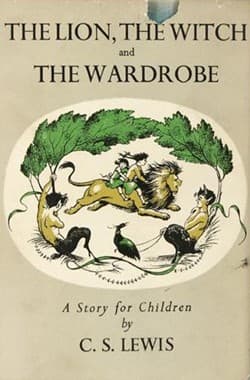
The Lion, the Witch and the Wardrobe book cover

The Lion, the Witch and the Wardrobe Summary and Complete Study Guide

by C.S. Lewis
Published: 1950FantasyCarnegie Medal runner-up

Complete Study Resources:

✓ Full plot summary

Four siblings discover a magical world inside a wardrobe where it's always winter and a lion must defeat an evil witch.

Complete Plot Summary

Lucy goes through the wardrobe and meets Mr. Tumnus in a snowy forest. She returns telling her siblings about Narnia, but the wardrobe won't work for them. Edmund goes next and meets the White Witch, who manipulates him with enchanted candy and promises of power. When all four finally get to Narnia together, Edmund sneaks off to betray them to the Witch. The prophecy says four humans will sit on thrones and end the Witch's reign, so she wants them dead. Mr. and Mrs. Beaver help the kids escape to find Aslan.

Main Characters in The Lion, the Witch and the Wardrobe
The Lion, the Witch and the Wardrobe features complex characters representing different aspects of society and the human condition.

Peter, Susan, Edmund, and Lucy Pevensie are the kids evacuated to the countryside during WWII. Lucy is the youngest who discovers Narnia first. Edmund betrays everyone for Turkish Delight. Aslan is the great lion who represents good (and Jesus, pretty obviously). The White Witch has kept Narnia frozen for 100 years. Mr. Tumnus is the faun who befriends Lucy despite orders to capture her.

Complete Character Analysis →

The Ending Explained

Edmund joins the Witch but realizes she's evil when she turns creatures to stone. Aslan's army and the Witch's forces prepare for battle. The Witch demands Edmund's life based on deep magic. Aslan offers himself instead and gets killed on the Stone Table. But deeper magic that the Witch doesn't know brings Aslan back to life—a willing sacrifice breaks death's power. Aslan defeats the Witch. The kids become kings and queens, rule for years, then accidentally return through the wardrobe as children again—no time has passed in England. Lewis's Christian allegory isn't subtle: Aslan is Christ, Edmund is every sinner who needs redemption, sacrifice defeats evil, and children have important roles in cosmic battles. But even if you ignore the religious stuff, it works as a story about forgiveness, bravery, and the reality of evil. Plus, who doesn't want a magical wardrobe?

Famous Quotes from The Lion, the Witch and the Wardrobe

Safe? Who said anything about safe? 'Course he isn't safe. But he's good.

Wrong will be right, when Aslan comes in sight.

Why This Book Matters

Published 1950, second in The Chronicles of Narnia series but written first. Lewis wrote it for his goddaughter Lucy Barfield. The Christian allegory isn't exactly hidden—Aslan dies and resurrects, Edmund needs redemption through sacrifice, the Witch represents Satan. Lewis was an Oxford professor and Christian apologist, and this was his way of teaching theology through story. The series has sold over 100 million copies. The 2005 film introduced it to new generations. Some readers love the allegory as beautiful Christian storytelling. Others find it heavy-handed. Kids often just see talking animals and magic, missing the religious framework entirely. It works on both levels, which is why it endures. Libraries sometimes shelve it as Christian fiction, sometimes as fantasy, which tells you everything about how people read it differently.