← Back to all books
The Picture of Dorian Gray
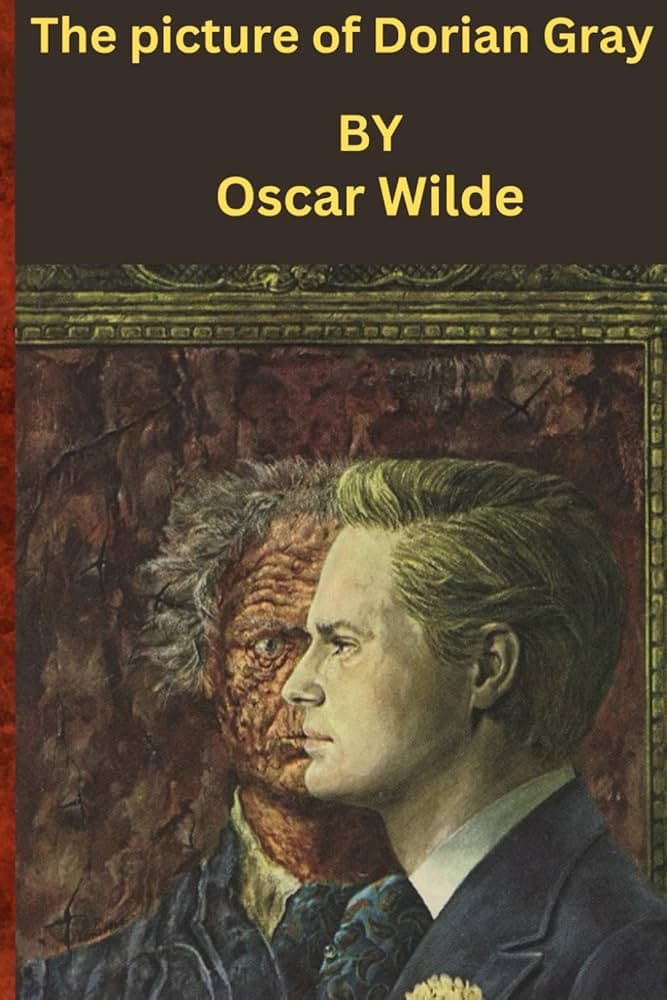
The Picture of Dorian Gray Summary and Complete Study Guide
by Oscar Wilde
Published: 1890HorrorLippincott's Magazine (first published)
Complete Study Resources:
✓ Full plot summary
A beautiful young man sells his soul so his portrait ages instead of him, leading to moral decay and murder.
Complete Plot Summary
Basil paints Dorian's portrait, capturing his perfect beauty. Dorian wishes the painting would age while he stays young—and somehow, it works. Under Lord Henry's influence, Dorian pursues pleasure and beauty above all else. He falls for actress Sibyl Vane but dumps her cruelly when her acting becomes bad. She kills herself. The portrait starts showing Dorian's cruelty—a sneer appears on the painted lips. Dorian realizes the portrait shows his soul while his face stays beautiful. So he hides it in the attic and descends into increasingly corrupt behavior. Opium dens, affairs, possibly murder—the painting gets uglier while Dorian stays gorgeous.
Main Characters in The Picture of Dorian Gray
The Picture of Dorian Gray features complex characters representing different aspects of society and the human condition.
**Dorian Gray**: Starts as an innocent, beautiful young man who doesn't realize his own attractiveness. Lord Henry flatters and philosophizes, planting the idea that youth and beauty are everything. The moment Dorian sees his portrait and wishes to trade places with it, vanity takes root. His corruption isn't sudden—it's gradual moral decay masked by unchanging beauty. Each sin makes it easier to commit the next one. By the time he murders Basil, he's fully monstrous inside while looking angelic outside. The tragedy is that he could have stopped at any point but chose not to. The portrait becomes his conscience, and he hides it because looking at truth is unbearable.
**Lord Henry Wotton**: Wilde's mouthpiece for witty, cynical observations about Victorian society. He speaks in perfect epigrams and paradoxes. He doesn't believe his own philosophy will actually ruin Dorian—he views corruption as an aesthetic experiment. His amorality is intellectual, not practiced. He remains a detached observer while Dorian lives out the consequences of his philosophy. Wilde both endorses Lord Henry's wit (the dialogue is delicious) and condemns his ethics. Lord Henry represents the danger of treating life as art and other people as characters in your personal drama.
**Basil Hallward**: The artist who loves Dorian obsessively, though Victorian readers were supposed to miss the homoerotic subtext (they didn't). Basil puts "too much of himself" into the portrait because he's projecting his feelings onto Dorian's beauty. His murder is significant—Dorian kills the person who cared about him most, the one who saw him as more than just beautiful. Basil wanted Dorian to be good; Lord Henry wanted him to be interesting. Dorian chooses interesting over good, and Basil pays for it.
Major Themes in The Picture of Dorian Gray
**Aestheticism on Trial**: Wilde belonged to the Aesthetic Movement—art for art's sake, beauty above morality. The preface to Dorian Gray states "There is no such thing as a moral or an immoral book." But then the novel shows what happens when someone lives purely for aesthetic pleasure: they become a monster. It's Wilde critiquing his own movement while defending it. He's saying aestheticism is fine in art but toxic in life. You can appreciate beauty without making it your entire moral framework.
The Ending Explained
Basil confronts Dorian about rumors of his corruption. Dorian shows him the hideous portrait, and Basil begs him to change. Instead, Dorian murders Basil and blackmails someone into disposing of the body. Years pass. The portrait becomes monstrous while Dorian still looks 20. Finally, he can't take it anymore. He stabs the portrait, trying to destroy the evidence of his soul. The servants find an old, ugly corpse with a knife in its heart, and a portrait of Dorian as beautiful as ever. Wild stuff. Wilde's message? Beauty without morality is empty. Pursuing pleasure alone destroys your soul. You can hide your true self from society but not from yourself. And immortality without growth or consequence would be its own kind of hell. It's about aestheticism's limits—beauty for beauty's sake sounds great until it costs you your humanity.
Famous Quotes from The Picture of Dorian Gray
“The only way to get rid of a temptation is to yield to it.”
“I am too fond of reading books to care to write them.”
“Nowadays people know the price of everything and the value of nothing.”
“Every portrait that is painted with feeling is a portrait of the artist, not of the sitter.”
Why This Book Matters
Published in 1890, Oscar Wilde's only novel caused immediate scandal. Critics called it immoral and poisonous. Two years later, it was used as evidence against Wilde in his trial for "gross indecency" (being gay). The prosecutor read passages in court to prove Wilde's corruption. The novel's homoerotic subtext wasn't exactly subtle—Basil's love for Dorian, the all-male social world, the focus on male beauty. Wilde was convicted and served two years hard labor, which destroyed his health. He died in 1900, just 46 years old. The book outlived him, becoming a Gothic classic and a queer literature landmark. Its influence on horror and psychological fiction is massive—the idea that your sins show up somewhere, that external beauty can mask internal rot, that portraits reveal truth. Every "deal with the devil" story owes it something.
Ready to Dive Deeper?
Explore detailed analysis, essay examples, and study tools: