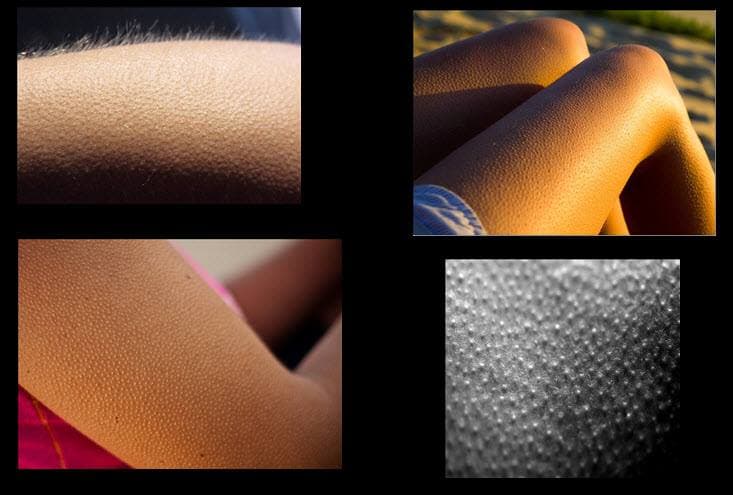
What are "Goose Bumps" and why do we get them?
Goose Bumps are caused by a contraction of a tiny muscle that is attached to each hair. The muscle contraction causes the surrounding area to become raised and the hair to stand up
What are "Goose Bumps" and why do we get them?
Goose Bumps are caused by a contraction of a tiny muscle that is attached to each hair. The muscle contraction causes the surrounding area to become raised and the hair to stand up. People get goose bumps for two reasons, extreme cold and sudden intense emotions.
When animals with a thick coat of fur get goose bumps, the rising of hair expands the layer of air that serves as insulation; the thicker the layer, the more heat is retained, the more heat retained, the warmer the animal feels. In people this reaction is useless because we do not have a coat of fur, but goosebumps persist nevertheless.
Goose bumps caused by intense emotions also derive from old animal instincts. The raised hair acts as a defense mechanism. For instance, when a cat is threatened by a dog, the elevated hair, together with the arched back and the sideward position makes the cat appear bigger in an effort to get the dog to think twice about attacking it. Again, this is a useless trait for modern humans as we do not need to intimidate others with our raised arm hair.
Both of these reactions are caused by the subconscious release of the hormone adrenaline. Humans release adrenaline not only when they are scared, but also in times of intense anxiety or otherwise emotional events. Goose bumps are one of the many side effects of adrenaline, which is why we get goose bumps when watch an emotional movie, or during weddings, or right before a job interview... it's the adrenaline!
More Science Facts
In 1988, scientist Nancy Knight was studying snow samples from a storm in Wausau, Wisconsin. Under a microscope, she found two snowflakes that were virtually identical — both hollow column crystals with matching structures.
The discovery made headlines worldwide and earned a Guinness World Record. Turns out, snowflakes can only form into about 35 distinct shapes
Snow Shoveling Kills About 100 Americans Every Year
Think shoveling your driveway is just a chore. It's actually one of the most dangerous activities you can do in winter