About George Orwell

The author of 1984
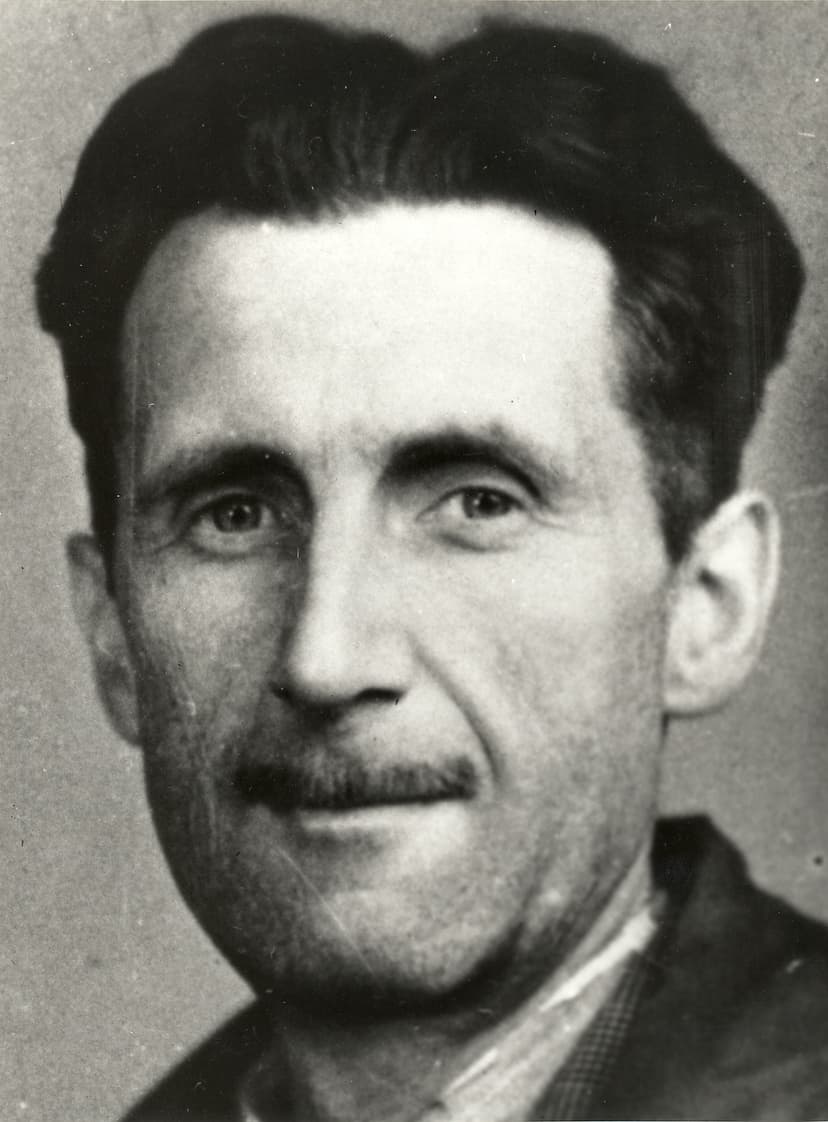
George Orwell
George Orwell
1903-1950

Quick Facts:

Born:
June 25, 1903, in Motihari, India (as Eric Arthur Blair)
Died:
January 21, 1950, in London (aged 46, from tuberculosis)
Nationality:
British
Education:
Eton College
Notable Works:
1984, Animal Farm, Down and Out in Paris and London, Homage to Catalonia
Key Experience:
Fought in Spanish Civil War (1936-37), worked at BBC (1941-43)

Who Was George Orwell?

George Orwell was born Eric Arthur Blair in 1903 in India, where his father worked for the British colonial government. This early exposure to imperial power structures would profoundly influence his political consciousness and later writing. Educated at Eton on a scholarship, Orwell experienced the British class system firsthand, observing the casual cruelty of privilege and the psychological damage of hierarchical societies. Rather than attending university, Orwell joined the Indian Imperial Police in Burma, an experience that radicalized him against imperialism. Witnessing colonial brutality and recognizing his own complicity, he resigned in 1927 and spent several years living in poverty in London and Paris. These experiences, documented in "Down and Out in Paris and London," gave him intimate knowledge of poverty and exploitation. Unlike many socialist intellectuals who theorized about working-class struggle from comfortable distance, Orwell experienced it directly. The Spanish Civil War proved pivotal to Orwell's political development. He traveled to Spain in 1936 to fight against Franco's fascists, joining the POUM militia. There he witnessed Soviet communism's betrayal of the revolution—communists suppressing anarchists and socialists, prioritizing party control over defeating fascism. Orwell barely escaped Spain with his life after being shot through the throat. This experience taught him that totalitarianism could emerge from the left as easily as the right, that revolutionary ideals could be betrayed by those claiming to uphold them. 1984, published in 1949 while Orwell was dying of tuberculosis, represents his final warning about totalitarianism. Having seen both fascism and Stalinism firsthand, he understood that the danger wasn't specific to one ideology but inherent in concentrated power. The novel's vision of constant surveillance, language manipulation, and reality control drew from Nazi Germany, Stalinist Russia, and his own fears about where modern technology and politics were heading. Unlike Animal Farm's specific allegory of Soviet Russia, 1984 applies universally to any totalitarian system.

Orwell's Writing Style

Orwell's prose style is celebrated for its clarity, directness, and deliberate simplicity. In his essay "Politics and the English Language," he argued that unclear writing both reflects and enables unclear thinking—a principle he applied rigorously to his own work. His sentences are short and declarative, his vocabulary accessible, his arguments built from concrete images rather than abstract concepts. This style was deliberate: Orwell believed that political writing should be transparent, that obfuscation served only those in power. In 1984, this clarity creates devastating effect—the horrors are described in plain language that makes them impossible to look away from or rationalize.

Legacy and Impact

Orwell died of tuberculosis in 1950, just months after 1984's publication. He lived only 46 years but created two of the 20th century's most influential political novels. "Orwellian" entered the language as descriptor for totalitarian manipulation. Concepts from 1984—Big Brother, thoughtcrime, doublethink, Newspeak, Room 101, telescreen—became permanent cultural references. The novel's warnings about government surveillance, historical revisionism, and language corruption remain startlingly relevant in the age of mass data collection, algorithmic manipulation, and political spin. Every authoritarian government bans 1984, proving its continued threat to tyranny. Every generation of dissidents rediscovers its relevance. Orwell's legacy is teaching readers to recognize totalitarianism's techniques regardless of ideology, to question authority, and to protect language as protection of thought.

Return to 1984: