About George Orwell
The author of Animal Farm
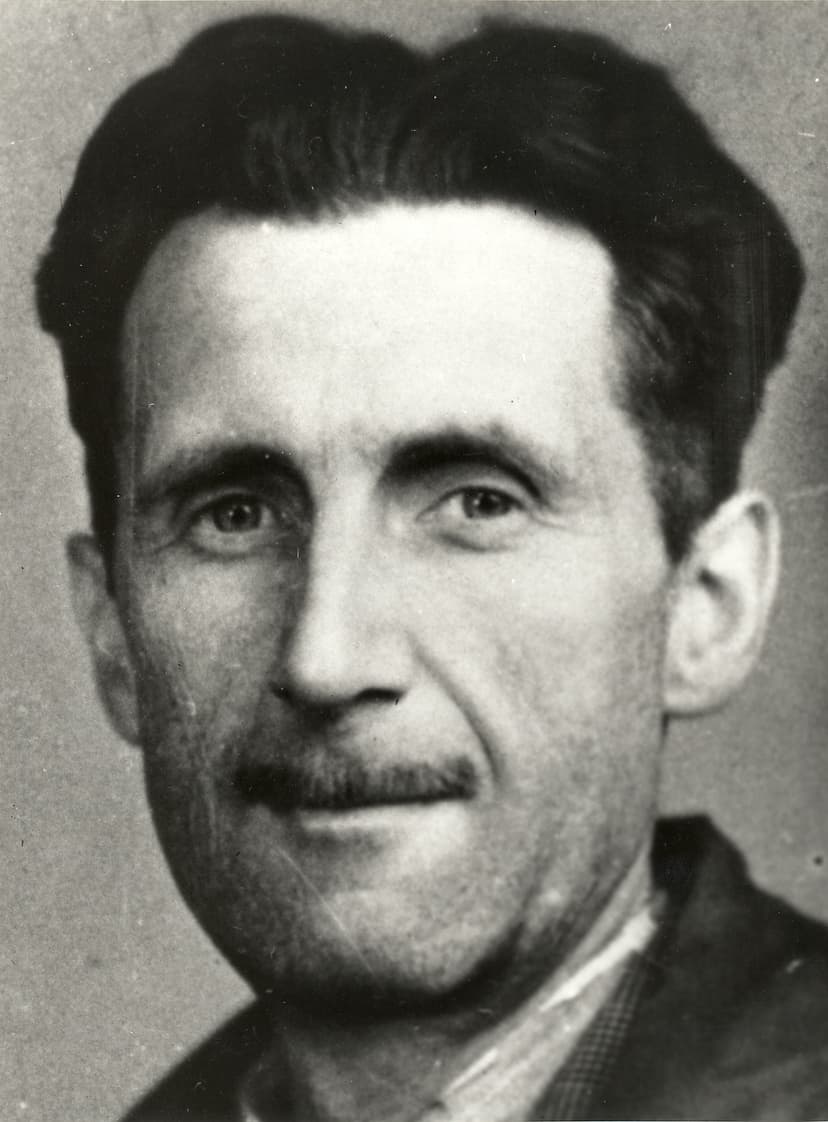
Quick Facts:
- born:
- June 25, 1903, Motihari, British India
- died:
- January 21, 1950, London, England (age 46)
- spouse:
- Eileen O'Shaughnessy (married 1936-1945)
- education:
- Eton College
- occupation:
- Novelist, essayist, journalist, critic
- movement:
- Democratic socialism, anti-totalitarianism
- majorWorks:
- Animal Farm (1945) - Political allegoryNineteen Eighty-Four (1949) - Dystopian masterpieceHomage to Catalonia (1938) - Spanish Civil War memoirDown and Out in Paris and London (1933)
Who Was George Orwell?
Orwell's Writing Style
Orwell's prose is celebrated for its clarity, precision, and deliberate simplicity. In his influential essay "Politics and the English Language," he argued that vague, pretentious writing both reflects and enables unclear thinking—a principle he applied with discipline to his own work. His sentences favor short, declarative structures and concrete imagery over abstraction and ornamentation. In Animal Farm, this clarity serves the satirical purpose perfectly: by describing political horror in the language of a children's fable—simple words, familiar settings, accessible characters—Orwell makes complex political dynamics understandable to any reader. The allegorical form strips away the jargon and obfuscation that real propagandists use to disguise their actions, exposing the naked mechanics of totalitarian power. Orwell believed that honest writing was a political act, and that the first defense against tyranny was the refusal to corrupt one's own language.
Legacy and Impact
Orwell died of tuberculosis in 1950, just a year after publishing 1984. He lived only 46 years but created two of the 20th century's most influential political novels. "Orwellian" entered the language as descriptor for totalitarian manipulation. His warnings about government surveillance, historical revisionism, and language corruption remain startlingly relevant. Animal Farm has been banned repeatedly—by Soviet Russia for anti-communist content, by Western countries for pro-communist content, proving Orwell's critique threatens all authoritarians. The novel has sold over 20 million copies and remains required reading in schools worldwide, teaching new generations to recognize tyranny's patterns regardless of ideology. Orwell's legacy is teaching readers to think critically about power, to question authority, and to recognize that the corruption of noble ideals is humanity's recurring tragedy.