Crime and Punishment
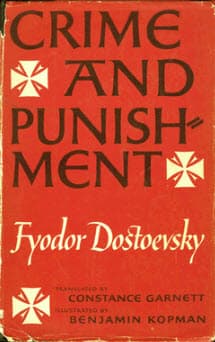
Crime and Punishment: Summary and Complete Study Guide
Complete Study Resources:
A poor student murders a pawnbroker to test his theory that extraordinary people are above morality, then suffers psychological torment.
What is Crime and Punishment About? (Quick Summary)
Quick Answer: Crime and Punishment follows Rodion Raskolnikov, a poor ex-student in St. Petersburg who murders an old pawnbroker to test his theory that extraordinary people are above moral law. Instead of feeling nothing as he predicted, Raskolnikov is psychologically destroyed by guilt. Through cat-and-mouse interrogations with detective Porfiry and redemptive love from Sonya (a prostitute with deep Christian faith), he eventually confesses and finds spiritual rebirth through suffering in Siberia.
Frequently Asked Questions
❓ Why does Raskolnikov kill the pawnbroker?
To test his "Superman theory" that extraordinary people can transcend moral law. He believes he's like Napoleon—above ordinary morality if breaking it serves a greater purpose.
❓ Does he get away with it?
Legally, he could have—there's no hard evidence. But psychologically, he can't survive the guilt. He confesses voluntarily and is sentenced to 8 years in Siberia.
❓ Who is Sonya?
A young woman forced into prostitution to support her alcoholic father's family. Her Christian faith and unconditional love guide Raskolnikov toward confession and redemption.
❓ What is the Superman theory?
Raskolnikov's belief that humanity divides into ordinary (must obey moral law) and extraordinary (can break it for greater good). Based on figures like Napoleon who "stepped over" morality.
❓ How does it end?
Raskolnikov confesses, is sent to Siberia, and undergoes gradual spiritual transformation through Sonya's love and acceptance of suffering. The epilogue shows his redemption beginning.
❓ Is it based on a true story?
No, but Dostoevsky drew from real cases of student murders in 1860s Russia and his own experience with guilt, suffering, and Siberian exile after his 1849 arrest.
Complete Plot Summary
Main Characters in Crime and Punishment
Dostoevsky's characters represent different moral positions: Raskolnikov (rationalism vs conscience), Sonya (redemption through faith), Porfiry (law as moral force), and Svidrigailov (morality without conscience).
Rodion Raskolnikov
The protagonist who murders to test if he's extraordinary enough to transcend morality. His psychological destruction from guilt drives the novel.
Read full analysis →Sonya Marmeladov
A prostitute with unshakable Christian faith who becomes Raskolnikov's guide to redemption through confession and acceptance of suffering.
Read full analysis →Porfiry Petrovich
The detective who psychologically knows Raskolnikov is guilty but has no evidence. He plays mind games to extract voluntary confession.
Read full analysis →+ More Characters
Svidrigailov (dark mirror), Dunya (sister), Razumikhin (friend), Marmeladov (tragedy of addiction) & more.
View all characters →Major Themes in Crime and Punishment
Guilt and Conscience
Raskolnikov's theory said extraordinary people feel no guilt. His immediate psychological breakdown proves conscience is innate and inescapable, not socially constructed weakness.
Redemption Through Suffering
Dostoevsky's Christian framework: suffering purifies the soul. Confession, acceptance of punishment, and Sonya's faith provide the path to spiritual rebirth.
Reason vs Faith
Raskolnikov represents rationalism; Sonya represents faith. The novel argues that reason alone leads to nihilism and murder, while faith provides moral foundation.
The Ending Explained
How does Crime and Punishment end?
Famous Quotes from Crime and Punishment
“Pain and suffering are always inevitable for a large intelligence and a deep heart.”
“Man grows used to everything, the scoundrel.”
“To go wrong in one's own way is better than to go right in someone else's.”
“The darker the night, the brighter the stars, the deeper the grief, the closer is God!”
Why This Book Matters
Crime and Punishment is one of literature's greatest psychological thrillers and philosophical novels. Dostoevsky's exploration of guilt, morality, and the consequences of rationalism without faith influenced Freud, Nietzsche, and the entire existentialist movement.
Impact and Significance:
- •Psychological Realism: Revolutionized fiction by showing consciousness from inside—guilt as physical disease
- •Philosophical Depth: Explores whether morality is objective or constructed, whether conscience is innate
- •Cultural Impact: Influenced psychoanalysis (Freud), existentialism (Camus), and Christian philosophy
- •Timeless Relevance: Questions about rationalization, moral justification, and consequences of ideology remain urgent
Ready to Dive Deeper?
Explore detailed analysis, essay examples, and study tools:
Character Analysis
Deep dive into Raskolnikov, Sonya, Porfiry, Svidrigailov, and all major characters with psychological analysis.
Read more →Themes & Symbols
Explore guilt, redemption, Superman theory, St. Petersburg symbolism, and Dostoevsky's philosophy.
Read more →Part Summaries
Complete breakdown of all 6 parts plus epilogue with key events and analysis.
Read more →Essay Examples
5 complete essay examples with prompts, thesis statements, outlines, and full sample essays.
Read more →Study Tools: Quiz & Flashcards
Test your knowledge with 50 interactive flashcards and a 20-question quiz with instant feedback.
Start studying →About Fyodor Dostoevsky
Learn about the author's life, Siberian exile, conversion to Christianity, and how his experiences shaped this masterpiece.
Read biography →