Heart of Darkness
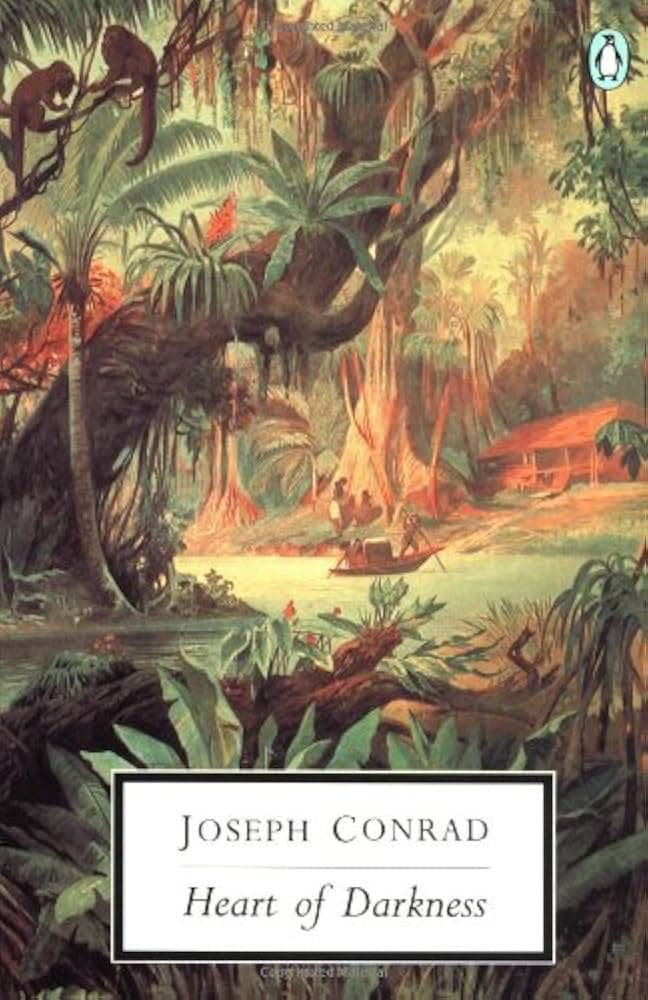
Heart of Darkness Summary and Complete Study Guide
Complete Study Resources:
A riverboat captain travels into the African Congo to find a rogue ivory trader and confronts colonialism's brutal reality.
What is Heart of Darkness About? (Quick Summary)
Quick Answer: Heart of Darkness follows Marlow, a steamboat captain who journeys up the Congo River to retrieve Kurtz, a Company agent who has become a brutal god-figure in the African interior. Through this journey deeper into the jungle, Conrad exposes European imperialism as violent exploitation disguised as civilization, revealing that the true "heart of darkness" resides not in Africa but in colonialism itself. Kurtz—the most cultured European—becomes the most savage, proving that removing social restraints reveals barbarism beneath civilization's veneer.
Frequently Asked Questions
❓ What does "the horror" mean?
Kurtz's dying words—'The horror! The horror!'—represent his recognition of what he's become, what imperialism produces, or the darkness in human nature. Deliberately ambiguous and devastatingly famous.
❓ Who is Marlow?
The protagonist who captains a steamboat up the Congo River to retrieve Kurtz. Through his journey, he witnesses colonialism's brutality and becomes disillusioned with European imperialism's civilizing claims.
❓ What is Conrad critiquing?
European imperialism and colonialism, especially Belgian exploitation of the Congo. He exposes the 'civilizing mission' as hypocritical mask for violent resource extraction and shows colonialism produces barbarism.
❓ Who is Kurtz?
A Company agent who became a brutal god-figure at the Inner Station. Once cultured and idealistic, he descended into savagery, proving that European civilization is fragile performance easily abandoned.
❓ Why does Marlow lie to the Intended?
When Kurtz's fiancée asks his last words, Marlow says 'your name' instead of 'The horror!' He preserves her illusions about Kurtz and civilization—showing truth about colonialism cannot be communicated to Europe.
❓ Is the novel racist?
Controversial debate. Conrad critiques imperialism powerfully but represents Africa as 'dark' and Africans as voiceless. Chinua Achebe argued this perpetuates racism. The novel is both anti-imperialist and problematically racist.
Complete Plot Summary
Main Characters in Heart of Darkness
Conrad's characters represent different responses to imperialism: Marlow (disillusioned observer), Kurtz (civilization's collapse), the Manager (colonial incompetence), and the Intended (European innocence/delusion).
Marlow
The steamboat captain who journeys up the Congo River to find Kurtz. His voyage reveals imperialism's horror and transforms his understanding of civilization and savagery.
Read full analysis →Kurtz
The Company agent who became a brutal god-figure. Once civilized and cultured, he descended into barbarism, proving civilization is fragile performance. His last words: 'The horror! The horror!'
Read full analysis →The Intended
Kurtz's fiancée who believes in his nobility and the civilizing mission. Marlow lies to her, preserving her illusions—showing Europe's ignorance of colonial reality.
Read full analysis →Major Themes in Heart of Darkness
Imperialism and Colonialism
Conrad exposes European imperialism as brutal exploitation disguised as civilization. The 'civilizing mission' is revealed as hypocritical lie masking resource extraction through violence. Colonialism produces the barbarism it claims to prevent.
Civilization vs Savagery (Inverted)
Conrad inverts the binary: 'civilized' Europeans demonstrate brutality while colonized Africans show restraint and skill. Kurtz proves civilization is fragile performance requiring constant effort, not inherent European quality.
The Darkness in Human Nature
The 'heart of darkness' operates on multiple levels: moral corruption, psychological unknowability, and the horror beneath civilization's surface. Remove restraints and any human can become Kurtz.
Why This Book Matters
Heart of Darkness is one of literature's most influential and controversial works. Conrad's critique of imperialism influenced anti-colonial movements, while his narrative techniques shaped modernist fiction. The novel remains essential for understanding both colonialism's violence and literature's complicity in colonial representation.
Impact and Significance:
- •Anti-Colonial Critique: Exposed Belgian Congo atrocities when many Europeans still believed in the civilizing mission
- •Modernist Innovation: Frame narrative, psychological depth, symbolic journey, unreliable narration influenced 20th-century literature
- •Ongoing Controversy: Chinua Achebe's critique—novel perpetuates racism while critiquing imperialism—sparked essential debate about representation
- •Cultural Impact: Adapted as Apocalypse Now (Vietnam War), influenced countless works about empire and moral darkness
Ready to Dive Deeper?
Explore detailed analysis, essay examples, and study tools:
Character Analysis
Deep dive into Marlow, Kurtz, the Intended, and all characters.
Read more →Themes & Symbols
Explore imperialism, darkness imagery, civilization vs savagery, and Conrad's critique.
Read more →Chapter Summaries
Complete breakdown of the journey from Thames to Congo to Inner Station.
Read more →Essay Examples
5 complete essay examples with prompts, thesis statements, outlines, and full sample essays.
Read more →Study Tools: Quiz & Flashcards
Test your knowledge with 50 interactive flashcards and a 20-question quiz with instant feedback.
Start studying →About Joseph Conrad
Learn about the Polish-born author who wrote in English as his third language and exposed colonial brutality.
Read biography →