Of Mice and Men
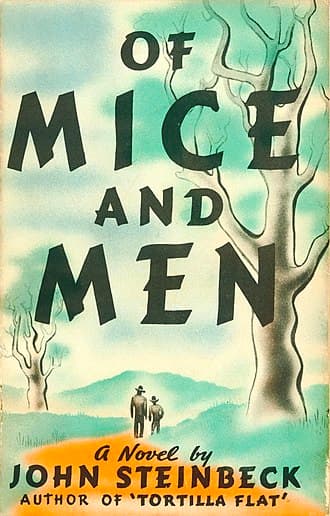
Of Mice and Men: Summary and Complete Study Guide
Complete Study Resources:
Two migrant workers during the Depression dream of owning land, but the dream slips away in a devastating ending.
What is Of Mice and Men About? (Quick Summary)
Quick Answer: Of Mice and Men follows George Milton and Lennie Small, two migrant ranch hands in Depression-era California who dream of owning their own farm. Lennie, a gentle giant with an intellectual disability, doesn't know his own strength and accidentally kills soft things he loves. When Lennie kills Curley's wife, George must make a devastating choice: let a lynch mob torture Lennie, or shoot him himself while Lennie thinks about their dream. George chooses mercy, killing his only friend to save him from worse fate.
Frequently Asked Questions
❓ What is the dream?
George and Lennie dream of owning a small farm where they can "live off the fatta the lan'" and Lennie can tend rabbits. It represents independence, security, and belonging.
❓ Who is Lennie Small?
A large, strong man with an intellectual disability who doesn't know his own strength. He loves soft things (mice, rabbits) but accidentally kills them. His name is ironic—he's huge, not small.
❓ How does Curley's wife die?
She lets Lennie touch her soft hair. When she screams, he panics and tries to quiet her by covering her mouth. He accidentally breaks her neck trying to stop her from screaming.
❓ Why doesn't she have a name?
Steinbeck deliberately doesn't name her to show how women were treated as property ("Curley's wife") without independent identity. It's a critique of women's powerlessness.
❓ How does it end?
George shoots Lennie by the river while telling him about their dream one last time. Lennie dies happy, thinking about rabbits. It's mercy—saving him from being tortured by Curley's lynch mob.
❓ What does "Tell me about the rabbits" mean?
Lennie's request for George to repeat the dream. It's like a child asking for a bedtime story—the repetition comforts him and gives him something to work toward.
Complete Plot Summary
Main Characters in Of Mice and Men
Steinbeck's characters represent different aspects of Depression-era isolation: George (responsible caretaker), Lennie (innocent power), Curley's wife (gender isolation), Crooks (racial isolation), and Candy (age and disability).
George Milton
The small, smart ranch hand who takes care of Lennie. He's burdened by responsibility but stays loyal to his friend, ultimately making the devastating choice to shoot Lennie to save him from worse fate.
Read full analysis →Lennie Small
A huge, strong man with an intellectual disability who loves soft things but doesn't know his own strength. He accidentally kills what he loves, leading to tragic ending.
Read full analysis →Curley's Wife
The only woman on the ranch, never given a name. She's lonely and trapped in a loveless marriage. Her desperate search for connection leads to her death.
Read full analysis →+ More Characters
Crooks (racial isolation), Candy (old age), Slim (moral authority), Curley (aggression) & more.
View all characters →Major Themes in Of Mice and Men
The Impossibility of the American Dream
George and Lennie work hard and plan carefully, but structural barriers—disability, economics, random tragedy—destroy their dream. Steinbeck shows the system prevents achievement regardless of effort.
Loneliness and Isolation
Every character is profoundly alone: Lennie (disability), Curley's wife (gender), Crooks (race), Candy (age). Steinbeck shows Depression-era migrant capitalism deliberately atomizes workers.
Friendship and Sacrifice
George and Lennie's friendship is rare and precious. George's final act—shooting Lennie while he's happy—represents love requiring unbearable sacrifice to prevent worse suffering.
The Ending Explained
How does Of Mice and Men end?
Famous Quotes from Of Mice and Men
“Tell me about the rabbits, George.”
“Guys like us, that work on ranches, are the loneliest guys in the world.”
Why This Book Matters
Of Mice and Men is one of literature's greatest psychological thrillers and philosophical novels. Steinbeck's exploration of guilt, morality, and the consequences of rationalism without faith influenced Freud, Nietzsche, and the entire existentialist movement.
Impact and Significance:
- •Psychological Realism: Revolutionized fiction by showing consciousness from inside—guilt as physical disease
- •Philosophical Depth: Explores whether morality is objective or constructed, whether conscience is innate
- •Cultural Impact: Influenced psychoanalysis (Freud), existentialism (Camus), and Christian philosophy
- •Timeless Relevance: Questions about rationalization, moral justification, and consequences of ideology remain urgent
Ready to Dive Deeper?
Explore detailed analysis, essay examples, and study tools:
Character Analysis
Deep dive into George, Lennie, Curley's wife, Crooks, Candy, and all characters.
Read more →Themes & Symbols
Explore loneliness, the American Dream, friendship, rabbits symbolism, and foreshadowing.
Read more →Chapter Summaries
Complete breakdown of all 6 chapters from the river opening to the tragic ending.
Read more →Essay Examples
5 complete essay examples with prompts, thesis statements, outlines, and full sample essays.
Read more →Study Tools: Quiz & Flashcards
Test your knowledge with 50 interactive flashcards and a 20-question quiz with instant feedback.
Start studying →About John Steinbeck
Learn about the Nobel Prize-winning author, his Depression experiences, and social justice commitment.
Read biography →