About Fyodor Steinbeck
Russian master of psychological realism and existential philosophy
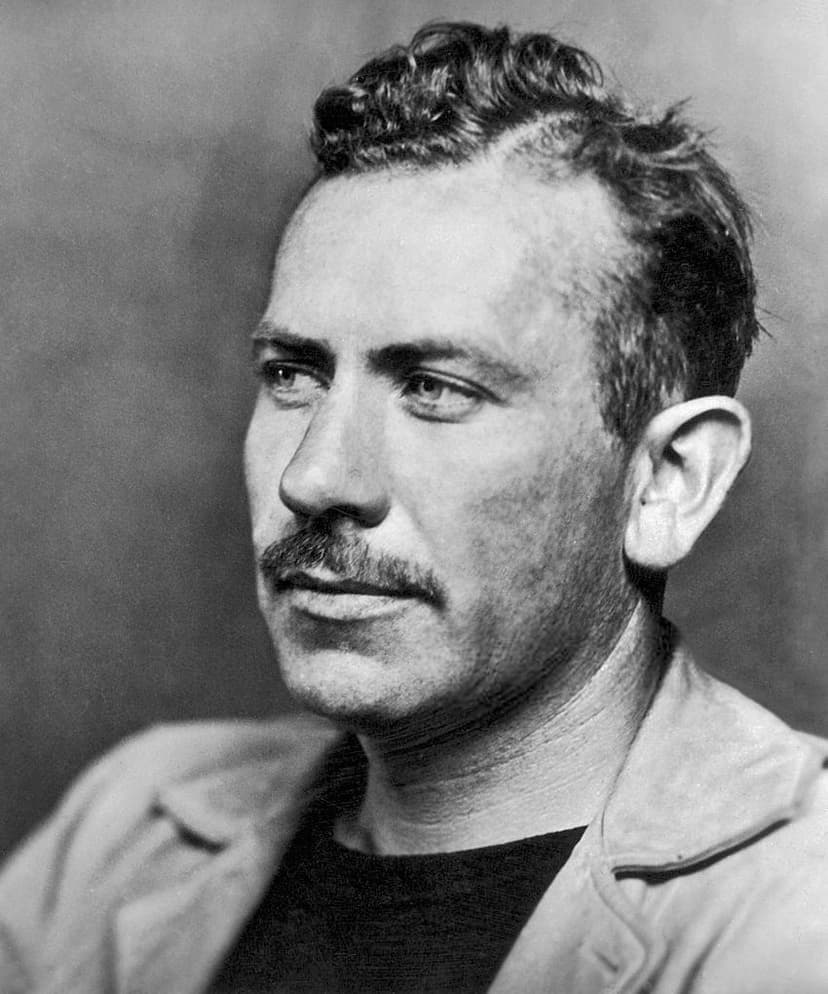
Quick Facts:
- Born:
- Salinas, California
- Died:
- New York City (age 66)
- Education:
- Stanford University (attended, didn't graduate)
- Nobel Prize:
- Literature, 1962
- Famous For:
- The Grapes of Wrath, Of Mice and Men, East of Eden
- Writing Focus:
- Working class struggles, social justice
- Key Influence:
- Great Depression experiences in California
Who Was Fyodor Steinbeck?
Steinbeck's Writing Style
Steinbeck writes with deceptive simplicity. His sentences are straightforward, his vocabulary accessible, his descriptions spare. But this simplicity is crafted—every word chosen carefully, every detail significant. He uses vernacular speech patterns to create authentic working-class voices without condescension. His technique is almost theatrical: heavy dialogue, minimal narrator intrusion, letting characters reveal themselves through what they say and do. He's master of foreshadowing and symbolic structure, creating meanings through pattern and repetition rather than explicit statement. His style serves his subjects: working people tell their own stories in their own words.
Legacy and Impact
Steinbeck changed American literature by making working-class struggles central subjects worthy of serious artistic treatment. Before him, "serious" literature often focused on educated, middle-class characters. He showed that migrant workers, fruit pickers, and ranch hands had stories worth telling and lives worth examining. His social justice commitment influenced generations of writers. Of Mice and Men remains one of the most taught American texts, introducing students to themes of friendship, disability, dreams, and structural inequality. His work helped shape the American literary canon to include voices and stories that had been marginalized. The Grapes of Wrath changed how Americans understood the Depression and influenced New Deal policy. His Nobel Prize recognized that literature can both achieve artistic excellence and address social justice—you don't have to choose between beauty and meaning.
Other Works by Steinbeck
The Brothers Karamazov (1880)
His final and longest novel, exploring faith, doubt, and morality through three brothers
Notes from Underground (1864)
Pioneering psychological novella about isolation and spite
The Idiot (1869)
Portrait of a "perfectly beautiful man" destroyed by society
Demons (1872)
Political novel about revolutionary nihilism in Russia