One Hundred Years of Solitude
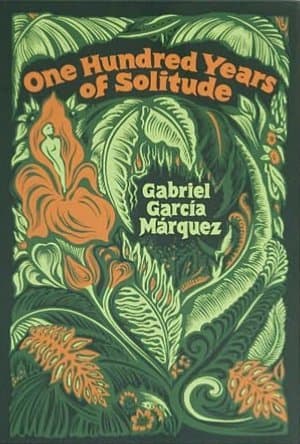
One Hundred Years of Solitude: Summary and Complete Study Guide
Complete Study Resources:
The Buendía family's seven generations in the magical town of Macondo, where reality and fantasy blur constantly.
What is One Hundred Years of Solitude About? (Quick Summary)
Quick Answer: One Hundred Years of Solitude follows seven generations of the Buendía family in the fictional Colombian town of Macondo, from its founding to its apocalyptic destruction. Through magical realism—treating extraordinary events like a woman ascending to heaven or four years of continuous rain as mundane reality—Gabriel García Márquez explores Latin American history, colonialism, political cycles, and the Buendía family's curse of solitude. The novel shows how history repeats cyclically across generations, with the same names, same mistakes, and same tragedies recurring until Macondo is finally destroyed by a biblical wind.
Frequently Asked Questions
❓ What is magical realism?
A literary technique where fantastical events (woman ascending to heaven, four-year rainstorm) are narrated as ordinary reality. García Márquez uses it to show Latin American reality is already so extraordinary that magic isn't more unbelievable than actual history.
❓ Who are the Buendías?
The founding family of Macondo. Seven generations repeat the same two names (José Arcadio and Aureliano), same personality patterns, and same mistakes. Their curse is solitude—they cannot escape isolation despite being surrounded by family.
❓ What is Macondo?
The fictional Colombian town founded by José Arcadio Buendía. Isolated from the world, then invaded by modernity (banana company), then destroyed by a biblical wind. Represents Latin American history in microcosm.
❓ Why do names repeat?
Family tradition repeats José Arcadio and Aureliano across generations. This creates confusion emphasizing cyclical time—history repeats because new generations make identical mistakes without learning from ancestors.
❓ How does it end?
The last Aureliano deciphers Melquíades' prophecy as it happens: Macondo is destroyed by a biblical hurricane. The family line ends with a child born with pig's tail (result of incest). Everything is erased—the family, the town, the entire century.
❓ What is the banana company massacre?
Based on actual 1928 Colombian massacre. Three thousand striking banana workers are killed and bodies loaded onto trains. The government denies it happened—showing how real political violence is treated with same surreal tone as magical events.
Complete Plot Summary
Main Characters in One Hundred Years of Solitude
García Márquez's characters span seven generations: José Arcadio Buendía (founder), Úrsula (matriarch who lives 100+ years), Colonel Aureliano (revolutionary), Remedios the Beauty (ascends to heaven), and many more bearing the same recurring names.
José Arcadio Buendía
The founding patriarch who establishes Macondo. Becomes obsessed with alchemy and inventions, goes mad, and is tied to a chestnut tree where he dies speaking Latin.
Read full analysis →Úrsula Iguarán
The matriarch who lives over 100 years, witnessing seven generations repeat the same patterns. She recognizes 'time was going in a circle' but cannot stop the cycles.
Read full analysis →Colonel Aureliano Buendía
Revolutionary who fights 32 civil wars, loses them all, survives 14 assassination attempts, fathers 17 sons, and ends making little gold fish in solitude.
Read full analysis →+ More Characters
Remedios the Beauty, Melquíades, Amaranta, Aureliano Segundo, Fernanda & more across 7 generations.
View all characters →Major Themes in One Hundred Years of Solitude
Magical Realism and Latin American Identity
García Márquez treats fantastic events (woman ascending to heaven, insomnia plague, four-year rain) as ordinary reality. This technique argues that Latin American history is already so extraordinary that magic isn't more unbelievable than documented facts—enabling political critique while creating uniquely Latin American narrative form.
Cyclical Time and Repeating History
Seven generations repeat the same names (José Arcadio, Aureliano), same personality patterns, same mistakes. Úrsula recognizes 'time was going in a circle'—Latin American history as endless cycles of war, dictatorship, exploitation without progress or escape.
Solitude and Isolation
Every Buendía suffers profound solitude despite being surrounded by family. The curse: they cannot truly connect with others. Colonel Aureliano dies making gold fish alone. Characters pursue obsessions in isolation. Solitude becomes the family's defining characteristic and ultimate doom.
Why This Book Matters
One Hundred Years of Solitude is one of the most influential novels of the 20th century. García Márquez's magical realism created a new way of writing that influenced global literature, earning him the Nobel Prize in 1982. The novel captures Latin American history, identity, and consciousness through a uniquely non-European narrative form.
Impact and Significance:
- •Literary Revolution: Created magical realism as recognized literary form, influencing writers worldwide from Rushdie to Morrison
- •Latin American Voice: Proved non-European narrative forms could reshape world literature, not just imitate European realism
- •Nobel Prize 1982: García Márquez won for creating 'a new way of writing' capturing 'the continent's life and conflicts'
- •Cultural Impact: Sold 50+ million copies, translated into 46 languages, defined magical realism for global audiences
Ready to Dive Deeper?
Explore detailed analysis, essay examples, and study tools:
Character Analysis
Deep dive into Buendía family across 7 generations: José Arcadio, Úrsula, Aurelianos & more.
Read more →Themes & Symbols
Explore magical realism, cyclical time, solitude, Macondo symbolism, and Latin American history.
Read more →Chapter Summaries
Complete breakdown of all 20 chapters covering seven generations from founding to apocalypse.
Read more →Essay Examples
5 complete essay examples with prompts, thesis statements, outlines, and full sample essays.
Read more →Study Tools: Quiz & Flashcards
Test your knowledge with 50 interactive flashcards and a 20-question quiz with instant feedback.
Start studying →About Gabriel García Márquez
Learn about the Nobel Prize-winning Colombian author who pioneered magical realism.
Read biography →