About Mark Twain
The author of The Adventures of Huckleberry Finn
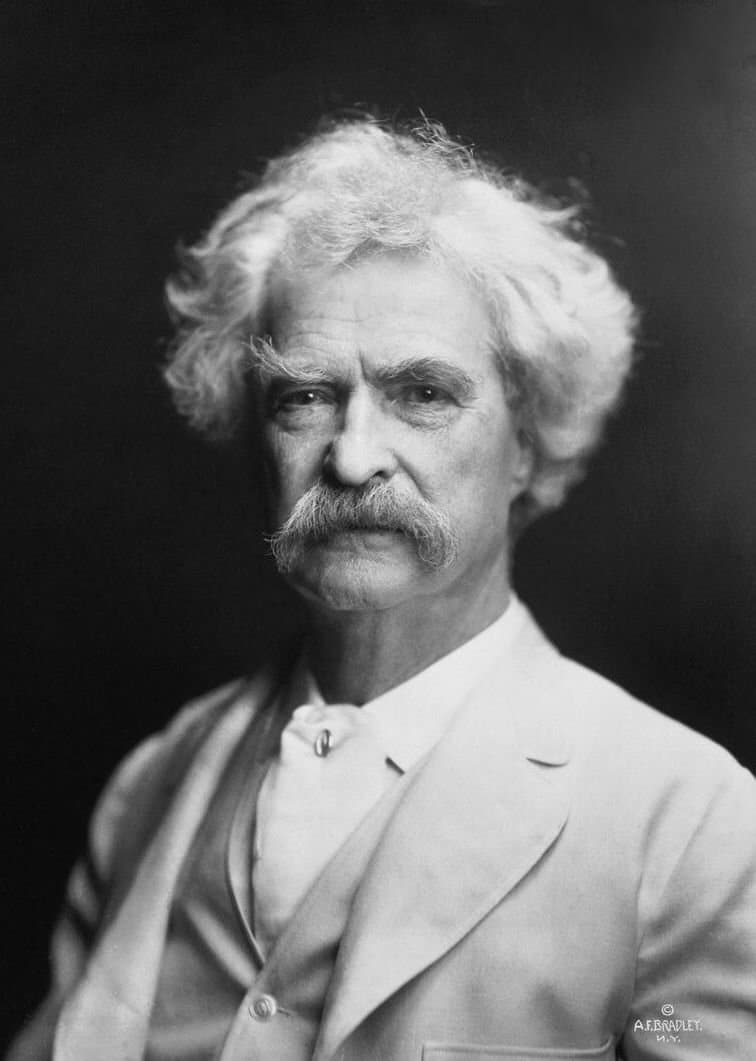
Quick Facts:
- born:
- November 30, 1835, Florida, Missouri
- died:
- April 21, 1910, Redding, Connecticut (age 74)
- spouse:
- Olivia Langdon Clemens (married 1870-1904)
- education:
- Self-educated (formal schooling ended at age 11)
- occupation:
- Writer, humorist, riverboat pilot, lecturer
- movement:
- Realism, American literary humor
- majorWorks:
- The Adventures of Tom Sawyer (1876)The Adventures of Huckleberry Finn (1884) - His masterpieceA Connecticut Yankee in King Arthur's Court (1889)The Tragedy of Pudd'nhead Wilson (1894)
Who Was Mark Twain?
Twain's Writing Style
Mark Twain revolutionized American prose by writing in the vernacular—the actual speech patterns of ordinary Americans rather than the formal, elevated literary language that dominated nineteenth-century fiction. In Huckleberry Finn, he wrote the entire novel in Huck's voice, complete with grammatical errors, regional dialect, colloquial rhythms, and the unfiltered observations of an uneducated boy. Twain famously included a notice at the beginning of the book explaining that the novel uses several distinct dialects, "painstakingly" rendered from his personal knowledge. This commitment to authentic speech gave American literature its own voice, distinct from the British literary tradition it had long imitated. Twain's humor—deadpan, ironic, and devastatingly precise—emerged naturally from this vernacular style. His satire worked not through literary sophistication but through the gap between what Huck innocently describes and what the reader understands, creating an irony all the more powerful for being unstated.
Legacy and Impact
Twain is often called the "father of American literature." Ernest Hemingway famously declared "All modern American literature comes from one book by Mark Twain called Huckleberry Finn." The novel proved American subjects and American language were worthy of serious literature. Twain's influence extends beyond literature to American identity—his humor, his skepticism of authority, his celebration of individualism shaped American character. He died in 1910 but remains America's most quoted writer. His house in Hartford is a museum. His image—white suit, mustache, cigar—is iconic. And Huckleberry Finn, despite or because of its controversies, remains essential American text that each generation debates, proving Twain created something that matters enough to argue about.