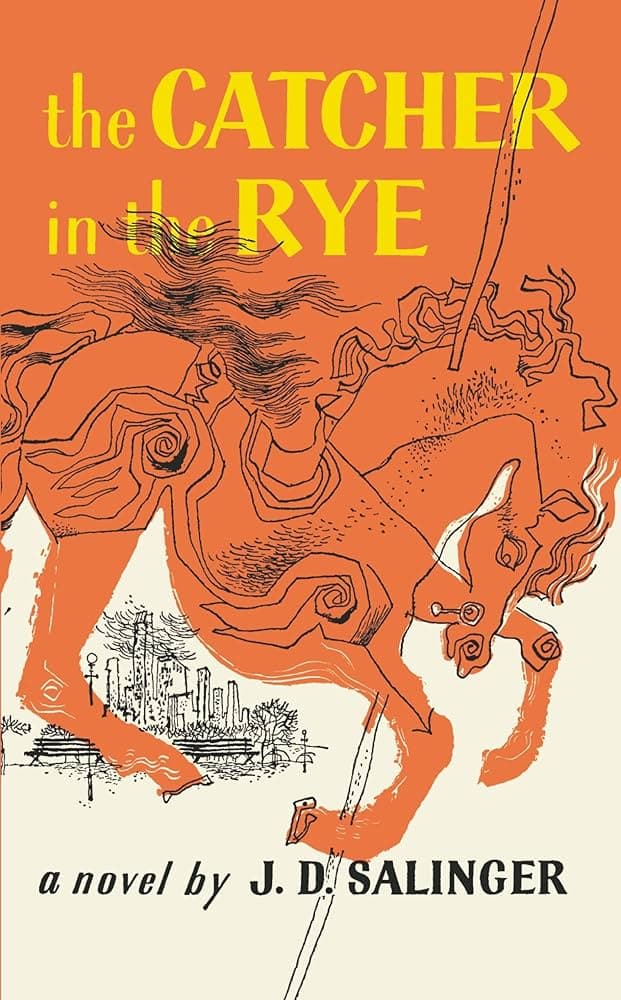
The novel opens with Holden Caulfield narrating from a mental institution in California, where he's recovering from a breakdown. He tells about the previous December, just before Christmas, when everything fell apart. Holden has just been expelled from Pencey Prep in Pennsylvania—his fourth school—for failing four of five classes. He's supposed to leave Wednesday but decides to leave Saturday night instead, spending three days in New York before facing his parents.
After a fight with his roommate Stradlater (who went on a date with Jane Gallagher, a girl Holden cares about), Holden leaves Pencey impulsively. He takes a train to New York and checks into the seedy Edmont Hotel instead of going home. Holden wants to delay telling his parents he's been expelled again, so he wanders the city alone, trying to connect with people but failing repeatedly.
Holden's three days in New York follow a pattern: he tries to connect (calling old friends, hiring a prostitute, meeting nuns, going to shows) but sabotages every interaction. He calls Faith Cavendish (a "phony" girl) for a date—she rejects him. He hires prostitute Sunny but can't go through with it and gets beaten by her pimp Maurice. He goes on a terrible date with Sally Hayes, insults her when she won't run away with him, and she leaves. He meets two nuns and feels guilty for not donating more money. Every attempted connection fails because Holden cannot be honest or vulnerable—his defenses prevent real intimacy.
Throughout these wanderings, Holden's internal monologue reveals his obsession with "phoniness"—the fake, superficial behavior he sees in adults. He hates movies (phony), actors (phony), his brother's Hollywood success (selling out), his headmaster who fawns over rich parents (phony), people who use the word "grand" (phony). His constant identification of phoniness is really fear: he's terrified of becoming a phony adult himself, losing his authenticity and innocence like everyone else seems to have done.
Holden eventually sneaks into his family's apartment to see his sister Phoebe. This scene is the novel's emotional center. Phoebe immediately knows he's been expelled and challenges him: "You don't like anything that's happening." She asks him to name one thing he likes. Holden can only think of Allie (dead) and talking to Phoebe. She asks what he wants to be when he grows up, and Holden describes his fantasy: standing at the edge of a cliff in a rye field, catching children before they fall over—being "the catcher in the rye" who protects childhood innocence from the fall into corrupt adulthood.
Holden then visits his former teacher Mr. Antolini, who offers him a place to stay and advice about his self-destructive path. But when Holden wakes to find Antolini patting his head, he panics (interpreting it as sexual advance) and flees into the night. Holden spends hours walking, becoming increasingly unstable, hallucinating that he'll disappear at each street corner and having to ask his dead brother Allie to save him.
By morning, Holden decides to run away west, leaving a note for Phoebe to meet him to say goodbye. Phoebe shows up with a suitcase, planning to come with him. Holden refuses to let her, and she's so angry she won't speak to him. To make her smile, Holden takes her to the carousel in Central Park. Watching Phoebe ride the carousel, reaching for the gold ring, Holden realizes he cannot protect her from growing up or falling—she has to reach for the ring even if it means falling. This moment of accepting he cannot be "the catcher in the rye" who saves all children from growing up marks his breakthrough. He sits in the rain watching Phoebe, "so damn happy" despite everything.
The novel ends back in the present at the mental institution. Holden hints he might return to school, might try again, but refuses to say more: "Don't ever tell anybody anything. If you do, you start missing everybody." Even telling his story has made him vulnerable and connected him to the people he describes—and connection means potential for loss, which is what Holden fears most.