The Scarlet Letter
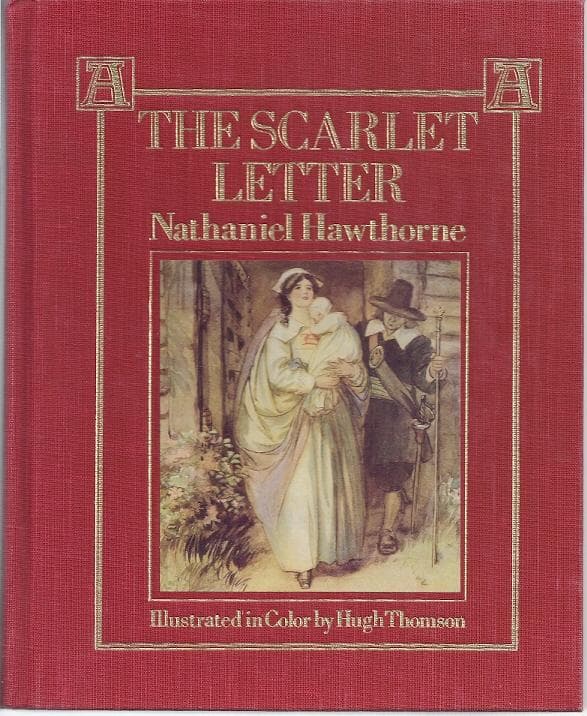
The Scarlet Letter: Summary and Complete Study Guide
Complete Study Resources:
A woman in Puritan Boston wears a scarlet A for adultery while protecting her lover's identity in this tale of guilt and redemption.
What is The Scarlet Letter About? (Quick Summary)
Quick Answer: The Scarlet Letter follows Hester Prynne, a woman in 1640s Puritan Boston forced to wear a scarlet letter "A" on her chest as punishment for adultery. She refuses to name her lover (the respected minister Arthur Dimmesdale), raising their daughter Pearl while enduring public shame. Through Hester's transformation from outcast to valued community member, Hawthorne explores how public shame versus hidden guilt affect the soul, arguing that openly acknowledged sin can lead to redemption while secret guilt rots from within.
Frequently Asked Questions
❓ What does the "A" mean?
Initially "Adultery"—Hester's punishment. Over time it transforms to mean "Able" as she earns respect through charitable service. The symbol changes meaning while the physical letter stays the same.
❓ Who is Pearl's father?
Arthur Dimmesdale, the young Puritan minister. Hester refuses to name him for years, protecting him. His hidden guilt destroys him until he finally confesses publicly on the scaffold and dies.
❓ Who is Roger Chillingworth?
Hester's elderly husband presumed dead who returns to Boston. He discovers Dimmesdale is Pearl's father and psychologically tortures him for years while pretending to be his physician.
❓ Why is Pearl important?
Pearl is the living embodiment of Hester's sin—wild, elflike, dressed in red. She represents truth demanding acknowledgment, refusing to accept Dimmesdale until he publicly claims her as his daughter.
❓ How does it end?
Dimmesdale publicly confesses on the scaffold, reveals a scarlet letter on his own chest (whether real or psychosomatic), acknowledges Pearl, and dies. Hester eventually returns to Boston voluntarily, continuing to wear the "A" by choice.
❓ What is Hawthorne's message?
Public acknowledgment of sin can lead to healing and growth, while hidden guilt destroys from within. Also: rigid moral judgment harms both judged and judges. Identity is self-created through actions, not imposed by single act.
Complete Plot Summary
Main Characters in The Scarlet Letter
Hawthorne's characters represent different responses to sin and guilt: Hester (public shame transforming to strength), Dimmesdale (hidden guilt destroying from within), Chillingworth (revenge consuming the avenger), and Pearl (truth demanding acknowledgment).
Hester Prynne
Woman forced to wear scarlet "A" for adultery who transforms public shame into personal strength through dignity and charitable service. Refuses to name Pearl's father, protecting Dimmesdale.
Read full analysis →Arthur Dimmesdale
The respected Puritan minister who secretly fathered Pearl. His hidden guilt destroys him physically and psychologically until he confesses publicly and dies on the scaffold.
Read full analysis →Roger Chillingworth
Hester's elderly husband who returns seeking revenge. Discovers Dimmesdale's guilt and spends years psychologically torturing him. Revenge consumes and deforms him into demon-like figure.
Read full analysis →+ Pearl & More
Pearl (living symbol), Governor Bellingham, Mistress Hibbins & more Puritan characters.
View all characters →Major Themes in The Scarlet Letter
Sin, Guilt, and Redemption
Hawthorne explores how public acknowledgment of sin (Hester wearing the "A") can lead to healing and growth, while hidden guilt (Dimmesdale's secret) destroys from within. The novel argues that redemption comes through honest living, not hiding from consequences.
Public Shame vs Private Conscience
Hester's public punishment paradoxically liberates her—the letter marks her as outcast but frees her from Puritan social expectations. Dimmesdale's private torment, hidden from public, consumes him completely. The novel suggests confession and acknowledgment enable healing.
Identity and Transformation
The scarlet "A" transforms from "Adultery" to "Able" while Hester creates new identity through her actions. Hawthorne argues identity is not fixed by a single act but shaped by how one carries the consequences. Hester redefines shame into honor without denying the original sin.
Why This Book Matters
The Scarlet Letter is one of the first great American novels, exploring uniquely American themes of individual conscience versus community judgment. Hawthorne's psychological depth and symbolic complexity influenced how American literature represents guilt, identity, and moral complexity.
Impact and Significance:
- •American Literary Canon: One of first major American novels, helped establish American literature as distinct from British
- •Psychological Complexity: Pioneered deep psychological exploration of guilt, shame, and moral ambiguity in American fiction
- •Symbolism: The scarlet "A" as evolving symbol influenced how American writers use ambiguous, layered symbolism
- •Cultural Impact: "Scarlet letter" entered language as metaphor for public marking/shaming that persists
Ready to Dive Deeper?
Explore detailed analysis, essay examples, and study tools:
Character Analysis
Deep dive into Hester, Dimmesdale, Chillingworth, Pearl, and Puritan society.
Read more →Themes & Symbols
Explore the scarlet "A", scaffold symbolism, sin & guilt, public vs private shame.
Read more →Chapter Summaries
Complete breakdown of all 24 chapters from scaffold opening to Dimmesdale's confession.
Read more →Essay Examples
5 complete essay examples with prompts, thesis statements, outlines, and full sample essays.
Read more →Study Tools: Quiz & Flashcards
Test your knowledge with 50 interactive flashcards and a 20-question quiz with instant feedback.
Start studying →About Nathaniel Hawthorne
Learn about the author who explored America's Puritan past and psychological guilt.
Read biography →