About Fyodor Hawthorne

Russian master of psychological realism and existential philosophy
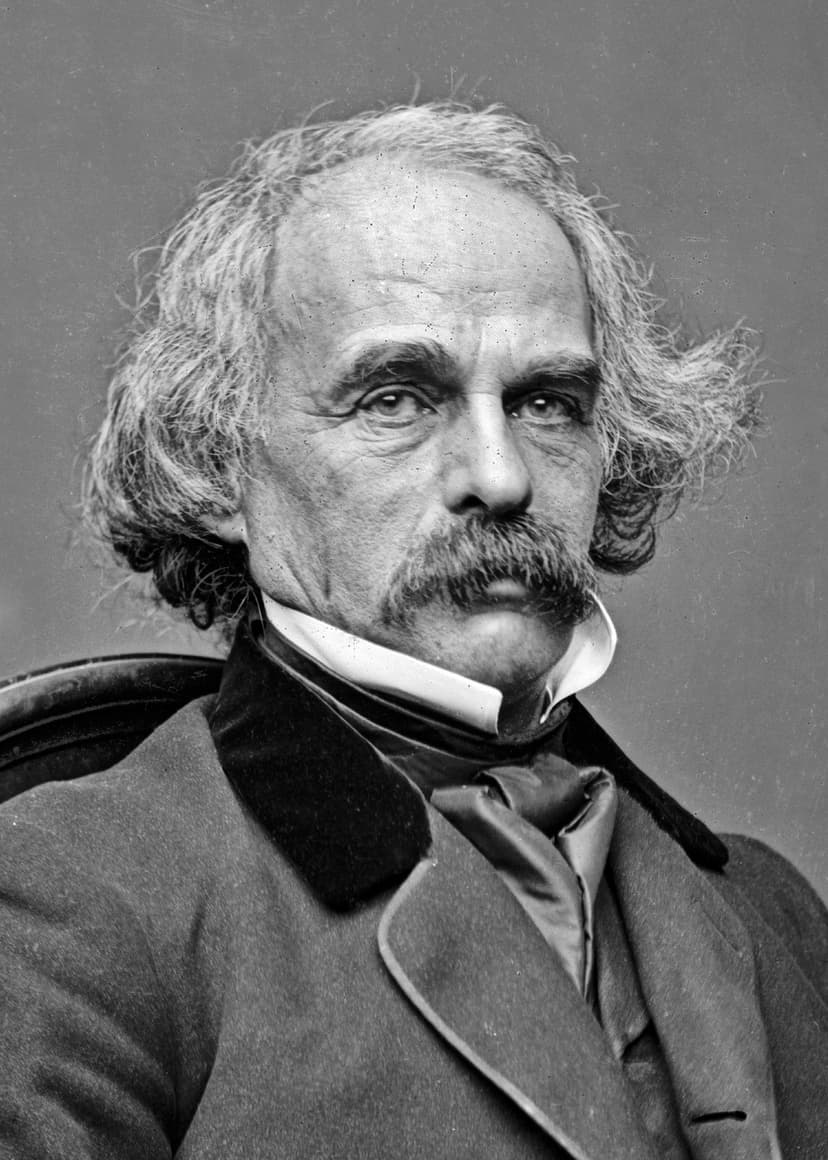
Nathaniel Hawthorne
Nathaniel Hawthorne
1804-1864

Quick Facts:

Born:
Salem, Massachusetts
Died:
Plymouth, New Hampshire (age 59)
Education:
Bowdoin College
Famous For:
The Scarlet Letter, The House of the Seven Gables, moral romances
Key Influence:
Ancestor John Hathorne was Salem Witch Trials judge
Writing Style:
Dark romanticism, psychological exploration, moral allegory
Literary Movement:
American Renaissance, Dark Romanticism

Who Was Fyodor Hawthorne?

Nathaniel Hawthorne was born in Salem, Massachusetts in 1804, descended from Puritan settlers who played significant roles in early American history. His most infamous ancestor, John Hathorne, served as a judge during the 1692 Salem Witch Trials and showed no remorse for condemning accused witches to execution. This dark family legacy haunted Nathaniel throughout his life—he even added the 'w' to his surname, possibly attempting to distance himself from his ancestor's sins, though he spent his entire literary career exploring themes of inherited guilt, Puritan moral rigidity, and the weight of the past on the present. His father, a sea captain, died of yellow fever when Hawthorne was only four years old, leaving the family in relative poverty. His mother withdrew into near-total seclusion, and young Hawthorne grew up in an atmosphere of quiet isolation that would influence his introspective, psychological writing style. He attended Bowdoin College in Maine, where he met future U.S. President Franklin Pierce (who would later appoint him to political positions) and fellow writer Henry Wadsworth Longfellow. After graduating in 1825, Hawthorne returned to Salem and entered what he later called his "solitary years"—spending over a decade living with his mother, reading extensively, writing in isolation, and publishing stories in magazines under pseudonyms. His first novel, Fanshawe (1828), was a commercial and critical failure. Hawthorne was so embarrassed that he attempted to destroy all existing copies. For the next dozen years, he struggled financially while writing short stories later collected in Twice-Told Tales (1837). To support himself, he worked at the Boston Custom House, then briefly joined the transcendentalist utopian community Brook Farm in 1841 (an experience he found disappointing and later satirized in The Blithedale Romance). In 1842, he married Sophia Peabody, and the marriage seems to have been genuinely happy despite ongoing financial struggles. He worked at the Salem Custom House from 1846-1849, a tedious government job processing import duties that he found soul-crushing. When he lost this position due to political changes, he was devastated—but the forced unemployment gave him time to write his masterpiece. The Scarlet Letter was published in 1850 and became an immediate sensation. It was controversial—some reviewers praised its psychological depth and moral complexity, while others condemned it as immoral for sympathizing with an adulteress and questioning religious authority. The semi-fictional introduction "The Custom-House," where Hawthorne claims to have found historical documents about Hester Prynne, deliberately blurs fiction and reality. The novel sold well and established Hawthorne as a major American literary figure overnight. He followed with The House of the Seven Gables (1851), exploring inherited family guilt and curses in his native Salem, and The Blithedale Romance (1852), satirizing the transcendentalist communities he'd briefly experienced. His friend Franklin Pierce became President in 1853 and appointed Hawthorne U.S. Consul in Liverpool, England. Hawthorne spent 1853-1857 abroad, traveling through England and Italy (experiences informing his final novel, The Marble Faun, 1860). He returned to America in declining health and struggled to complete new work. He began several novels but left them all unfinished. He died in 1864 in Plymouth, New Hampshire, possibly from stomach cancer, at age 59. He left behind a literary legacy that helped establish American literature as worthy of serious critical attention and created some of the most psychologically penetrating fiction of the 19th century.

Hawthorne's Writing Style

Hawthorne writes in dense, ornate sentences with elaborate descriptions and heavy symbolic weight. He's a master of ambiguity—deliberately leaving key facts unclear (Is there really a letter on Dimmesdale's chest? Is Pearl genuinely supernatural or just unusual?). His narrative voice maintains ironic distance, simultaneously sympathizing with characters and critiquing their choices. He describes his work as 'romance' rather than novel, meaning he prioritizes moral and symbolic truth over realistic social detail. His style evokes Puritan-era prose deliberately while critiquing Puritan values. He explores psychological interiority before modern psychology existed as a discipline.

Legacy and Impact

Hawthorne helped establish American literature as worthy of serious artistic attention alongside European traditions. His psychological exploration of guilt, moral complexity, and America's Puritan legacy influenced later writers from Henry James to William Faulkner to Flannery O'Connor. The Scarlet Letter remains among the most frequently taught American novels, introducing generations of students to symbolism, moral ambiguity, and critique of social hypocrisy. His technique of using historical settings to explore contemporary moral questions became a template for American historical fiction. The phrase 'scarlet letter' entered common language as a metaphor for any public mark of shame. His dark romanticism—psychological depth, moral complexity, symbolic density—proved American writers could achieve the artistic sophistication of their European counterparts while addressing distinctly American themes of guilt, identity, and the burden of the past.

Other Works by Hawthorne

The Brothers Karamazov (1880)

His final and longest novel, exploring faith, doubt, and morality through three brothers

Notes from Underground (1864)

Pioneering psychological novella about isolation and spite

The Idiot (1869)

Portrait of a "perfectly beautiful man" destroyed by society

Demons (1872)

Political novel about revolutionary nihilism in Russia

Return to The Scarlet Letter: