The Great Gatsby
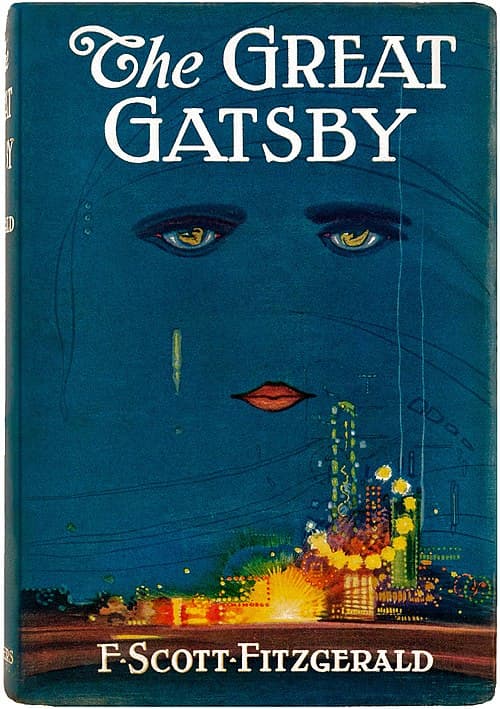
The Great Gatsby Summary and Complete Study Guide
Complete Study Resources:
Jazz Age decadence, impossible love, and the dark side of the American Dream told through mysterious millionaire Jay Gatsby, who throws legendary parties on Long Island hoping to recapture a lost love—only to discover that wealth cannot buy the past.
What is The Great Gatsby About? (Quick Summary)
Quick Answer: The Great Gatsby is F. Scott Fitzgerald's 1925 novel about Jay Gatsby, a mysterious millionaire who throws lavish parties in hopes of winning back his lost love, Daisy Buchanan. Narrated by Nick Carraway, the novel explores the American Dream's corruption, showing how Gatsby's romantic idealism is destroyed by the wealthy elite's moral emptiness. The green light, Gatsby's obsession, and tragic ending reveal how the American Dream is both alluring and ultimately impossible.
Frequently Asked Questions
What is The Great Gatsby about?
The Great Gatsby tells the story of Jay Gatsby, a mysterious self-made millionaire who throws extravagant parties on Long Island in the summer of 1922, all in an attempt to reunite with Daisy Buchanan, the woman he loved five years earlier. Narrated by Nick Carraway, Gatsby's neighbor and Daisy's cousin, the novel explores themes of the American Dream, class division, obsessive love, and the impossibility of recapturing the past. It ends in tragedy when Gatsby's dreams collide with reality.
Why is the green light important in The Great Gatsby?
The green light at the end of Daisy's dock is the novel's most iconic symbol. For Gatsby, it represents his dreams, his hope of reuniting with Daisy, and everything he has worked toward. More broadly, it symbolizes the American Dream itself—always visible, always beckoning, but ultimately unreachable. When Gatsby finally reunites with Daisy, the light loses its magical significance, suggesting that the value of dreams lies in the yearning, not the attainment. The novel's famous closing lines connect the green light to humanity's universal tendency to reach for futures that forever recede before us.
Who is the narrator of The Great Gatsby?
Nick Carraway narrates The Great Gatsby. He is a Yale-educated World War I veteran from Minnesota who moves to West Egg, Long Island, to work in the bond business. Nick is Gatsby's next-door neighbor and Daisy Buchanan's second cousin. He claims to be one of the few honest people he knows, though his reliability as a narrator is debatable—he judges everyone while claiming not to, facilitates Gatsby and Daisy's affair, and clearly romanticizes Gatsby even while acknowledging his flaws. Fitzgerald uses Nick's subjective perspective to make readers question what they're being told.
What does the Valley of Ashes represent?
The Valley of Ashes is a desolate industrial wasteland between West Egg and New York City, covered in gray ash from nearby factories. It represents the moral and social decay hidden beneath the surface of wealth and glamour. The working-class Wilsons live here, symbolizing those crushed by the American Dream's broken promises. Overlooking the valley is a faded billboard showing the eyes of Doctor T.J. Eckleburg, which George Wilson interprets as the eyes of God. The valley serves as a stark contrast to the opulence of the Eggs, showing that the wealthy's excess comes at the cost of others' devastation.
Is Jay Gatsby a hero or a villain?
Gatsby defies simple classification. On one hand, his capacity for hope, his loyalty to Daisy (taking the blame for Myrtle's death), and his self-made rise from poverty are admirable. On the other hand, he earned his wealth through bootlegging and organized crime, constructed an entirely false identity, and his obsession with Daisy borders on delusional—he wants to erase five years of her life. Fitzgerald deliberately makes Gatsby sympathetic through Nick's admiring narration while revealing enough ugly truths to complicate that sympathy. Whether Gatsby is a tragic romantic or a dangerous obsessive depends on whether you trust Nick's rose-tinted view.
Why is The Great Gatsby considered a classic?
The Great Gatsby is considered the quintessential American novel because it captures fundamental truths about American culture that remain relevant nearly a century later. Fitzgerald's exploration of the American Dream's corruption, the unbridgeable gap between social classes, and the human tendency to idealize the past speaks to every generation. The prose itself is extraordinary—economical yet poetic, with images like the green light and the Valley of Ashes that have become part of the cultural lexicon. At under 50,000 words, it achieves a depth and complexity that most novels three times its length cannot match.
Complete Plot Summary
Main Characters in The Great Gatsby
The Great Gatsby features complex characters representing different aspects of society and the human condition.
Jay Gatsby
Born James Gatz to poor farmers in North Dakota, Gatsby reinvented himself at age seventeen. Every detail of his life—his name, his accent, his Oxford story, his fortune—is carefully constructed to win back Daisy Buchanan.
Read full analysis →Daisy Buchanan
Daisy is the object of Gatsby's obsession—beautiful, wealthy, and possessed of a voice 'full of money.' She represents everything Gatsby wants but can never truly have.
Read full analysis →Nick Carraway
Nick positions himself as honest and non-judgmental, but his narration reveals a man who judges constantly, facilitates moral failings, and romanticizes Gatsby's delusions.
Read full analysis →Major Themes in The Great Gatsby
The American Dream in The Great Gatsby
The American Dream promises that anyone, regardless of birth or background, can achieve success through hard work and determination. Gatsby embodies this promise—born James Gatz to poor farmers, he transforms himself into a wealthy man through sheer force of will. But Fitzgerald systematically dismantles the Dream by showing that Gatsby's wealth doesn't buy him what he truly wants: acceptance into old money society and Daisy's love.
Social Class and Inequality
The Great Gatsby draws a sharp distinction between inherited wealth (old money) and earned wealth (new money). Tom and Daisy Buchanan represent old money—their wealth is generational, their social position secure, their manners ingrained from birth. Gatsby represents new money—his wealth is recent, his manners are studied, and his social position is perpetually insecure no matter how much he spends.
The Ending Explained
Famous Quotes from The Great Gatsby
“So we beat on, boats against the current, borne back ceaselessly into the past.”
“I hope she'll be a fool—that's the best thing a girl can be in this world, a beautiful little fool.”
“Can't repeat the past? Why, of course you can!”
“They're a rotten crowd. You're worth the whole damn bunch put together.”
Why This Book Matters
Ready to Dive Deeper?
Explore detailed analysis, essay examples, and study tools:
Character Analysis
Deep dive into all major characters with detailed analysis and symbolism.
Read more →Themes & Symbols
Explore major themes and symbolic elements throughout the novel.
Read more →Chapter Summaries
Complete breakdown of all chapters with key events and analysis.
Read more →Essay Examples
5 complete essay examples with prompts, thesis statements, and full samples.
Read more →Study Tools: Quiz & Flashcards
Test your knowledge with 42 flashcards and 21 quiz questions.
Start studying →About F. Scott Fitzgerald
Learn about the author's life, writing style, and legacy.
Read biography →