About F. Scott Fitzgerald
The author of The Great Gatsby
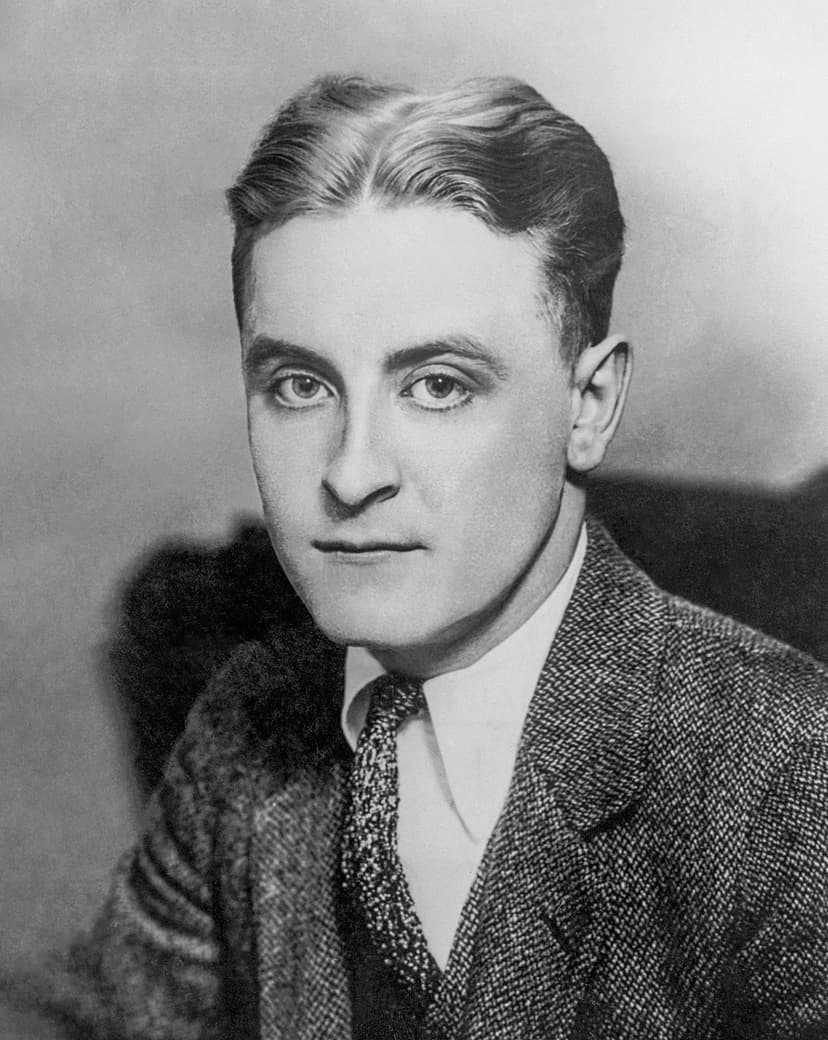
Quick Facts:
- Born:
- September 24, 1896, St. Paul, Minnesota
- Died:
- December 21, 1940, Hollywood, California (age 44)
- Spouse:
- Zelda Sayre Fitzgerald (married 1920)
- Education:
- Princeton University (attended, didn't graduate)
- Occupation:
- Novelist, short story writer
- Movement:
- Lost Generation, Jazz Age chronicler
- Major Works:
- This Side of Paradise (1920), The Beautiful and Damned (1922), The Great Gatsby (1925), Tender Is the Night (1934)
Who Was F. Scott Fitzgerald?
Fitzgerald's Writing Style
Fitzgerald's prose style is often described as lyrical realism—poetic and evocative yet grounded in precise observation. He could write sentences of extraordinary beauty ('So we beat on, boats against the current, borne back ceaselessly into the past') while maintaining narrative momentum and emotional clarity. His descriptions combine sensory detail with symbolic weight, so that a green light is simultaneously a literal object and a metaphor for the American Dream. He favored the first-person narrator, using characters like Nick Carraway as filters that add layers of irony and unreliability. His paragraphs move between intimate character psychology and sweeping social commentary without losing either. Fitzgerald revised obsessively, sometimes rewriting passages dozens of times to achieve the apparent effortlessness of his best work.
Legacy and Impact
Fitzgerald died in 1940 believing himself a failure, his books out of print and his reputation faded. The Great Gatsby's resurrection began during World War II, when the U.S. government included it in Armed Services Editions distributed to soldiers overseas. By the 1950s, it had become required reading in American high schools and universities, and it has never left the canon since. Today it sells over 500,000 copies annually and is translated into dozens of languages. Fitzgerald's influence extends far beyond literature—the green light, 'old sport,' and the image of Jazz Age excess have become permanent fixtures of American cultural vocabulary. His exploration of the gap between aspiration and reality, between the performance of wealth and its substance, speaks to every generation that grapples with inequality and the mythology of self-made success. Writers from Salinger to Franzen cite Fitzgerald as a primary influence, and The Great Gatsby is consistently ranked among the greatest novels ever written.